 Kono Vidovic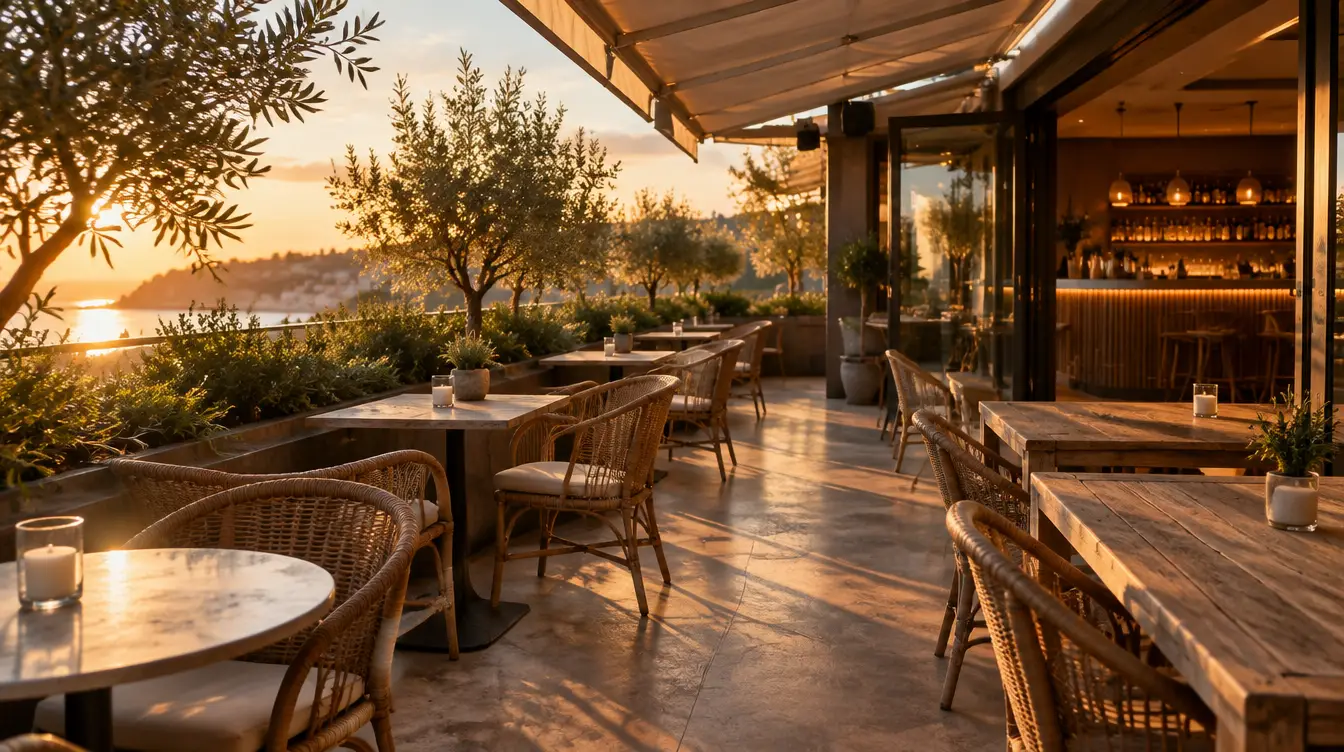
Music for bars is three decisions, not one: which genre palette suits your type of bar, where the music comes from, and who is allowed to change it. A cocktail bar and a late-night bar are different businesses with different music, and most bars get into trouble by copying a soundtrack that belongs to the other one.
I have been programming bars for 34 years, which is long enough to have made the mistake myself. This guide is the operator’s side: what to play by bar type, what supplying it actually costs, and the two situations that break an otherwise good soundtrack. If you want the hour-by-hour tempo detail instead, that is in my guide to songs for a bar.
What Music Suits Your Type of Bar?
Match the palette to what people came to do. That sounds obvious and it is the decision most bars skip, because they choose music by the owner’s taste rather than by the room’s job.
| Bar type | Genre palette | What it is doing |
|---|---|---|
| Hotel and cocktail bar | Nu-jazz, deep house, soul, bossa nova | Holds a conversation at normal speaking volume |
| Neighbourhood pub | Classic soul, funk, indie, familiar rock | Feels like it has always been there |
| Restaurant bar | Soul and disco edits moving into deeper house | Survives the crossover from dinner to drinking |
| Late-night bar | House, disco, nu disco, funk with body | Carries a full, loud room and holds people in it |
| Sports bar | Almost irrelevant between fixtures, and silent during them | Loses to the commentary, so plan for silence |
That last row catches people out. A sports bar spends its most valuable hours with the music off, so the soundtrack only has to work in the gaps. Programming it like a late-night bar wastes effort on hours that do not exist.
What Does It Cost to Supply a Bar With Music?
The music, the licence and the hardware are three separate lines on the budget, and only the first is what most comparison pages talk about.
| Deliverable | Price | Unit | Qualifier |
|---|---|---|---|
| Custom mix, 60 minutes | EUR 249 | Per mix, one-off | Excludes VAT where applicable |
| Custom mix, 90 minutes | EUR 349 | Per mix, one-off | Excludes VAT where applicable |
| Custom mix, 120 minutes | EUR 449 | Per mix, one-off | Excludes VAT where applicable |
| Live DJ | Indicative, request a quote | Per event | Excludes travel and accommodation |
| Public performance licence | Set by your collecting society | Per premises, per year | Not sold by me, arranged by you |
The choice that matters is between a commercial streaming service billed monthly per site and a set of custom mixes you pay for once and own. A chain with twelve bars usually wants the first. A single bar with a settled identity usually does better with the second, because the monthly fee never stops and the curation was built for a segment rather than for your room. I set out that comparison in full in my guide to retail and venue music systems.
What Changes on a Terrace?
Everything about volume, and nothing about the playlist.
A terrace has no walls to hold sound, so the same setting that feels right indoors disappears outside and the same music that works inside carries straight to your neighbours. Two practical consequences:
- Zone it separately. A terrace and an indoor room are two acoustic situations. One feed at one volume serves neither well.
- Expect a noise limit. Most municipalities set one, and in the Netherlands it is set locally rather than nationally, so check with your own gemeente rather than assuming.
- Drop the bass, not the tempo. Low frequencies travel furthest and annoy neighbours first. Thinning the bass on the terrace feed keeps the energy without the complaint.
- Plan for the season. A terrace that runs from April to September is half your trading year in a different acoustic space, and it deserves its own brief.
What Changes on a Live Music Night?
Two things, and the second one costs money if you get it wrong.
Programmatically, a live night needs the recorded music to set up the room and then get out of the way. The half hour before a band starts should lift slightly without competing, and the music after should not simply resume where it left off, because a room that has just watched a performance is at a different energy than one that never did.
Commercially, a ticketed or live event is usually tariffed differently from background music. Your standard premises licence covers playing recorded music in your bar. It does not automatically cover a ticketed music event, and it is normally the venue rather than the band that carries the obligation for a covers set. Tell your collecting society before the night rather than afterwards, because adding an event to an existing licence is routine while explaining one that already happened is not.
Who Decides What Plays?
One named person, and not whoever is nearest the tablet.
This is the least glamorous section on this page and the one that determines whether any of the rest survives. A bar soundtrack degrades in a predictable way: a bartender changes it on a slow Tuesday, a new manager deletes what they dislike without replacing it, someone adds a seasonal set in December that is still playing in March. Within a quarter nothing reflects a decision anyone made deliberately.
Do I Need a Licence for Music in My Bar?
Yes. Any bar playing recorded music in public needs its own public performance licence, and a personal streaming subscription does not cover it, because it is licensed for personal, non-commercial use only.
In the Netherlands that means a combined Buma/Stemra and Sena licence, arranged through mijnlicentie.nl. In the UK it is TheMusicLicence from PPL PRS. In Germany you need both GEMA and GVL. In the United States there is no joint venture, so ASCAP, BMI, SESAC and GMR are separate.
I will state the separation plainly because suppliers in this field routinely blur it. A custom mix is a music source, not a licence. It changes where your music comes from and does nothing to your public performance obligation. If you buy a mix from me, you still arrange your own licence.
Key Takeaways:
- Choose the genre palette from your bar type rather than your taste. A cocktail bar and a late-night bar are different businesses.
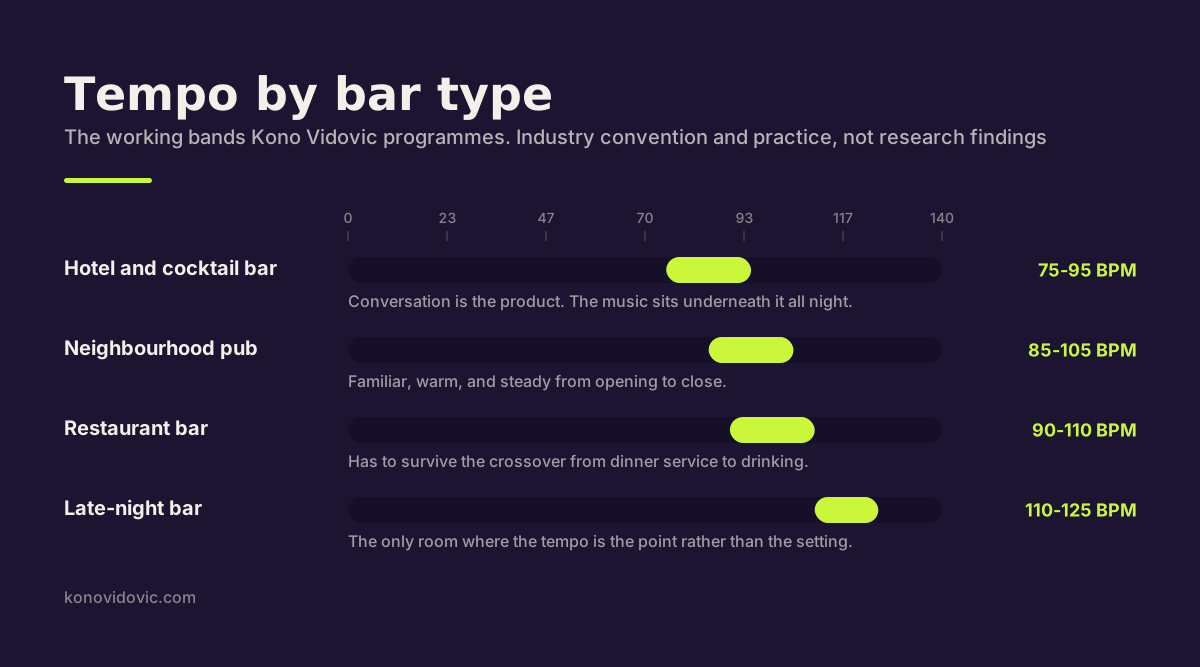
- Working tempo bands run from 75 to 95 BPM in a cocktail bar up to 110 to 125 late at night. These are convention and practice, not research findings.
- A sports bar is silent during fixtures, so programme the gaps rather than the night.
- A terrace needs its own zone, its own volume and less bass, because low frequencies reach your neighbours first.
- A custom mix is a music source and never a licence. Your bar still needs its own public performance licence, and a live night may be tariffed separately.
Frequently Asked Questions
What music should a bar play?
Music matched to the type of bar rather than to the owner’s taste. A hotel or cocktail bar wants nu-jazz, soul and deep house at 75 to 95 BPM so conversation stays easy. A neighbourhood pub wants familiar soul, funk and indie. A late-night bar wants house and disco at 110 to 125. A sports bar mostly wants silence during fixtures.
How much does bar music cost?
Either a monthly fee per site with a commercial streaming service, or a one-off with a custom mix, which starts at EUR 249 for 60 minutes and runs to EUR 449 for 120. Your public performance licence is a separate annual cost set by your national collecting society, and hardware is a third line on the budget.
Can I use Spotify in my bar?
Not a personal subscription. That is licensed for personal, non-commercial use only, so a bar needs its own public performance licence on top of whatever it uses as a music source: Buma/Stemra and Sena in the Netherlands, TheMusicLicence in the UK, GEMA and GVL in Germany, separate ASCAP, BMI, SESAC and GMR licences in the United States.
Does a terrace need different music from inside?
The same music at a different volume and with less bass, delivered as its own zone. A terrace has no walls to contain sound, so the level that feels right indoors vanishes outside while the low frequencies carry to your neighbours. Check your local noise limit with your gemeente, since in the Netherlands it is set locally.
How often should a bar change its music?
Refresh the tracks quarterly and keep the rules fixed for years. Changing the sound every few weeks means nobody is programming, and a bar that never changes it starts to feel stale to staff long before customers notice.
Should I let customers request songs?
Decide before the night rather than during it. There is no single right answer, but there is a right time to agree it, and a bartender improvising a policy at eleven o’clock is how a carefully built soundtrack falls apart in twenty minutes.
Want a soundtrack built for your bar rather than for a category? Order a custom DJ mix from EUR 249, or get in touch and tell me what your room sounds like at nine on a Friday.