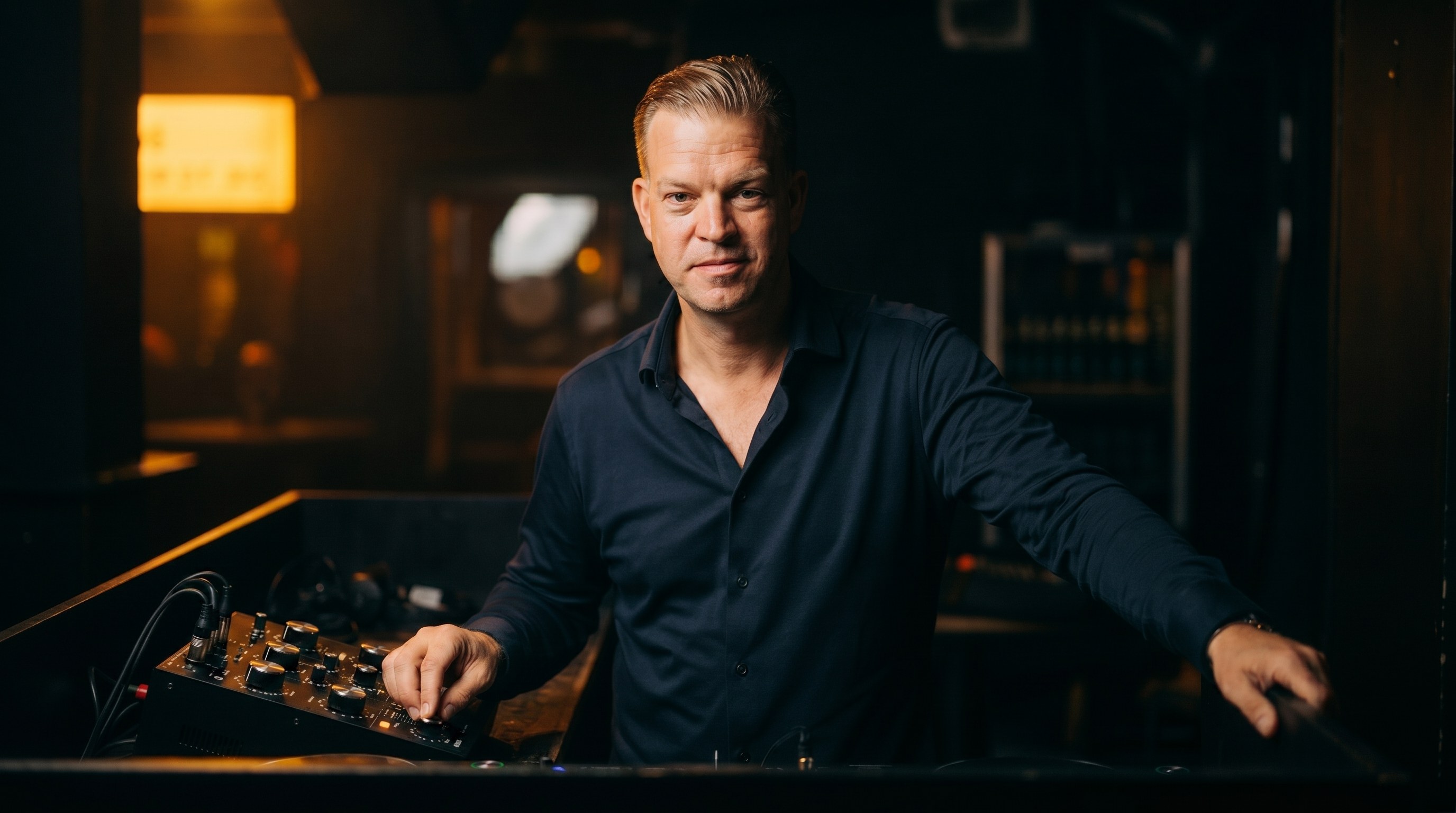
 Kono Vidovic
As a working convention I programme fine dining at 55 to 75 BPM, casual dining at 75 to 100, retail at 90 to 120 and late-night bars at 110 to 125. Those are industry practice and my own, not research findings. Tempo is still the most powerful and most misunderstood variable in hospitality music: get it wrong and you either push customers out faster than they meant to leave, or make them so sluggish they linger well past their welcome.
The science here is solid - not speculative. And applying it is exactly the kind of work that separates a genuine music strategy consulting engagement from someone just picking a playlist.
The Science Behind BPM and Spending
The research on music tempo and consumer behavior dates back to the 1980s, most notably work by Ronald Milliman published in the Journal of Consumer Research. His studies in both retail and restaurant environments showed clear, measurable effects from music tempo. Slow music - under approximately 72 BPM - led to customers spending more time and more money. Fast music - above 94 BPM - increased pace of movement and reduced dwell time.
The mechanism is physiological. Music with a tempo close to or below resting heart rate (approximately 60-80 BPM) activates a relaxation response. People slow down physically, become less alert in a tense sense, and shift into a more leisurely mode of engagement with their environment. They browse more, they eat more slowly, they order more drinks.
Higher tempo music does the opposite. It creates subtle urgency. People eat faster, make quicker decisions, and move on. This is not a negative outcome if you’re running a fast-casual lunch service that needs table turnover. It’s a serious problem if you’re running a dinner service where check size depends on guests lingering over multiple courses.
Volume interacts with tempo significantly. Loud fast music creates maximum urgency. Quiet slow music creates maximum relaxation. Loud slow music is an unusual combination that can feel oppressive. Quiet fast music can feel pleasantly energetic without being driving. Understanding these interactions is part of applying BPM strategy properly.
How Different Speeds Affect Customer Behavior
Below 70 BPM: Creates maximum calm and leisure. Guests lose track of time. This is the territory of fine dining, luxury spas, and high-end retail where the sales model depends on extended engagement. The risk is that it can feel soporific at the wrong volume level or in a venue that doesn’t have the visual and service quality to match.
70-90 BPM: The range that supports relaxed but engaged behavior. Guests are calm, comfortable, and attentive to their experience without being artificially slowed down. This works well for mid-market restaurants, hotel lobbies, and boutique retail where the goal is a pleasant, unhurried experience.
90-110 BPM: Moderate energy. The guest is subtly activated - they feel the energy of the space, they’re more likely to be sociable, and they make purchasing decisions more readily. This is the territory of casual dining, active bars, and retail where browsing and impulse purchasing are part of the business model.
Above 110 BPM: Creates genuine energy and pace. Works well for fast casual environments where high throughput is the goal, gym environments, and late-night bar settings where the atmosphere should feel charged. Not appropriate for any setting where extended dwell time and high per-head spend are the targets.
BPM Recommendations by Venue Type
These ranges are starting points, not rigid rules. Genre affects perception of tempo significantly - a 90 BPM hip-hop track feels very different from a 90 BPM acoustic folk track. The energy comes from more than the raw number. Volume, instrumentation, production style, and lyric content all interact with tempo to create the overall effect.
How to Change BPM Throughout the Day
Static BPM throughout a service period is a missed opportunity. Most hospitality venues have distinct service phases with different objectives, and the music should shift accordingly.
| Time Period | Venue Type | Recommended BPM | Goal |
|---|---|---|---|
| Pre-opening / setup | Any | 100-120 | Staff energy, momentum |
| Lunch service | Restaurant | 85-100 | Moderate pace, good turnover |
| Mid-afternoon | Cafe/Retail | 80-95 | Calm browsing, extended dwell |
| Early dinner | Restaurant | 75-90 | Relaxed transition, drinks |
| Peak dinner | Fine dining | 60-75 | Slow pace, high spend |
| Peak dinner | Casual dining | 80-95 | Energy, sociability |
| Late evening | Bar | 90-115 | Energy, extended stay |
| Last hour | Any | Match opening energy | Gentle signal to guests |
The transitions between these phases should be gradual - a 15-20 BPM jump in a single track change is noticeable and jarring. Professional programming involves moving through the range incrementally over 20-30 minutes, so guests experience the shift without consciously registering it.
This level of programming is one of the things that makes a custom mix or a professional consultation genuinely valuable compared to a static playlist. The energy arc is designed - it doesn’t happen by accident.
If you want to apply BPM strategy specifically to your venue, get in touch and we’ll build something that works for your service model and your customers.
Key Takeaways:
- Music tempo directly influences how long customers stay and how much they spend
- Slow music (below 75 BPM) increases average spend; fast music (above 100 BPM) increases turnover
- Different venue types need different BPM ranges - fine dining and spas need slow, fast casual needs faster
- BPM should shift gradually across a service period to match changing business objectives
- Genre, volume, and production style all interact with raw BPM to create the actual effect
How Do You Find Out What BPM You Are Already Playing?
Measure it before you change it, because almost every venue I audit is playing faster than the owner believes. A room that feels calm to someone standing still behind a bar often reads very differently to a guest halfway through a meal.
The practical routes, cheapest first:
- Search the track. Typing a track name plus BPM returns the figure for almost any commercial release.
- Use a lookup tool. Tunebat, Soundiiz and similar services report tempo per track, and some let you scan an entire playlist at once.
- Tap it out. Any tap-tempo app gives you a usable reading in ten seconds, which is enough to know whether you are at 90 or 120.
Sample across the day rather than once. Take five tracks at opening, five at peak and five in the last hour, average each block, and compare those three numbers against the bands above. The gap between what you intended and what is actually playing is usually the whole problem.
Frequently Asked Questions
How do I find out the BPM of tracks I want to use?
Most DJ software (Rekordbox, Serato, Virtual DJ) automatically detects and displays BPM for any audio file. Streaming services like Spotify have BPM data accessible through their API, and some third-party tools like Soundiiz or Tunebat.com let you look up BPM for individual tracks. If you’re manually curating a playlist, a quick search for “[track name] BPM” usually returns the correct value.
Does genre matter more than BPM?
Both matter, and they interact. A 70 BPM electronic track with heavy bass and aggressive production creates a very different environment from a 70 BPM classical piece. Tempo sets the structural pace; genre and production style set the emotional tone. You need to consider both together. A tempo recommendation is a starting point - you still need to curate within that range for genre appropriateness.
What if my venue does both lunch and dinner with very different target BPMs?
This is common and manageable. The key is a planned transition between the two phases. Start shifting the tempo 30-45 minutes before your dinner service begins - gradually reduce the BPM, bring the volume down slightly, and move to warmer, more relaxed genre choices. Guests arriving for dinner should step into a clearly different atmosphere from the lunch energy.
Can BPM strategy work in retail where people move through the space at different speeds?
Yes - retail is one of the most studied contexts for music tempo effects. The research shows that slower music increases browsing time and basket size in most retail environments. The exception is high-traffic fast retail (convenience stores, pharmacies) where faster tempo can improve throughput and reduce perceived wait times. For most boutique or lifestyle retail, staying in the 85-100 BPM range with appropriate genre is a strong default.
Is there a risk of BPM manipulation feeling artificial or manipulative to customers?
Customers don’t consciously register BPM strategy - they experience the mood of the space. No one has ever walked out of a fine dining restaurant complaining that the music was deliberately slow. They describe the atmosphere as “relaxed,” “intimate,” or “sophisticated.” The perception is of quality and care, not manipulation. The only failure mode is when the music is so clearly mismatched to the concept that it breaks the experience.
Knowing the BPM band is the easy half. Finding tracks that sit in it, hold a mood and do not repeat inside a shift is the work. That is what a custom DJ mix from EUR 249 is for, and my music for restaurants page covers how it fits a service day. Get in touch with your trading hours.


