 Kono Vidovic
A sonic brand audit is a diagnosis of the sound a business already makes: what is playing, where, who chose it, and how far that has drifted from what the brand claims about itself. It produces a written finding, not a new soundtrack. Those are two different pieces of work and they are often sold as one.
I run these, and the first thing worth saying is that there is no published standard for how. Nobody has agreed a method, so every agency’s audit is its own invention, including mine. If you want the strategy that an audit feeds into, my guide to sonic branding covers building an identity from scratch. This page is for when you already have something playing and you are not sure whether it is right.
What Is a Sonic Brand Audit?
It is an inventory and an assessment: every place your brand produces sound, what is actually coming out, and whether that matches the positioning you say you have. The word audit is doing real work there. It is backward-looking, and it does not include making anything.
Most businesses that need one do not know they need one. The symptom is not that the music is bad, it is that nobody can answer simple questions about it: who chose this, which account is it coming from, when was it last changed, and who is allowed to change it. When those answers are missing, the sound has stopped being a decision.
What Does an Audit Actually Cover?
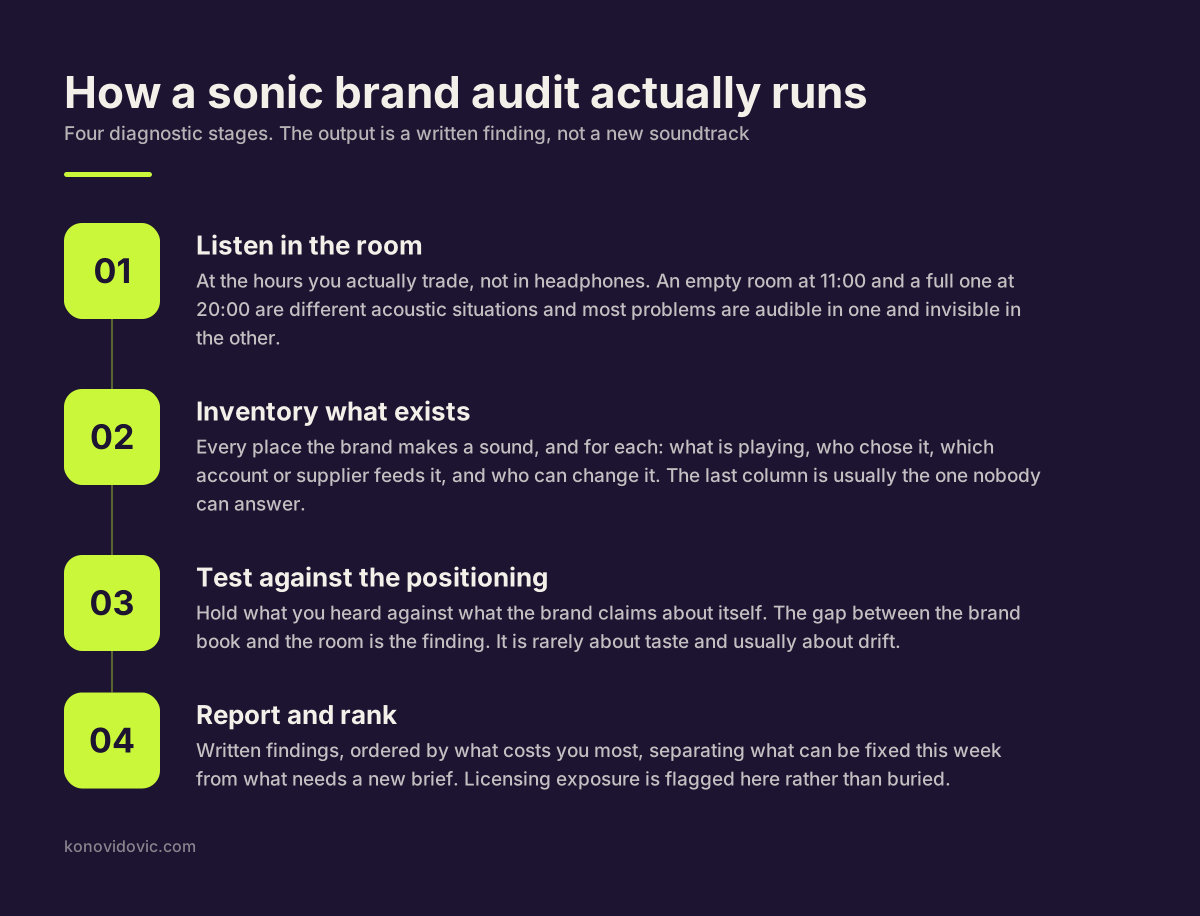
Four stages, in order, because each one needs the previous one to be useful.
- Listening in the room, at the hours you trade. Not in headphones and not from a dashboard. An empty room at eleven and a full one at eight are different acoustic situations, and most faults are obvious in one and invisible in the other.
- A touchpoint inventory. Every place the brand makes a sound, with four columns: what is playing, who chose it, which supplier or account feeds it, and who has authority to change it. The last column is the one nobody can fill in.
- Testing against the positioning. Holding what you heard against what the brand book claims. The gap is the finding, and it is rarely about taste.
- A written report, ranked. Ordered by what is costing you most, separating what can be fixed this week from what needs a new brief.
That fourth point is the deliverable. If a proposal describes an audit and the output is a playlist, you are being sold production with a diagnostic label on it.
What Does the Industry Actually Publish?
Very little, and that is worth knowing before you compare quotes.
The most detailed public framework I can find is MassiveMusic’s SoundCheck, which describes an audit built from brand strategy, competitor analysis, touchpoint analysis, stakeholder interviews, audience analysis, consumer testing, an optional financial and licence-compliance review, and a composite score they call MusicIQ combining consistency, differentiation and audience fit.
That is a serious and well-structured offer, and it is a vendor’s own description of its product rather than an independent standard. The same page carries a claim that brands with higher scores are fifty per cent more likely to lead their category, with no published method behind it, so I would not weigh that figure at all.
I will also name a number you will meet if you research this: a claim that sonic logos deliver dramatically higher brand recall than visual elements alone, usually attributed to Harvard Business Review. I could not trace it to a primary source. It appears across agency pages and AI-written articles, each citing the last. I do not use it and I would treat a supplier who quotes it as having sourced their deck from blog posts.
What Do You Get, and What Does It Cost?
| Deliverable | What it contains | Price |
|---|---|---|
| Walkthrough audit, single site | Listening visit at two dayparts, touchpoint inventory, written findings ranked | Request a quote, scoped per site |
| Multi-site audit | The above across a sample of locations, plus the consistency gap between them | Request a quote |
| Audit plus brief | Findings, then the corrective sonic brief written against them | Request a quote |
| The fix itself | Sequenced audio built to the brief | From EUR 249 per custom mix |
I quote audits per engagement rather than from a rate card, because the only honest driver of the price is how many rooms and how many suppliers are involved. A single bar is a morning. Twelve hotels with four zones each is a different project.
When Is an Audit Worth Paying For?
And the honest counter-list. Do not buy an audit if you own one venue, you choose the music yourself, and you already know it is wrong. You do not need a diagnosis to confirm something you can hear. Spend the money on fixing it.
An audit earns its cost when the problem is that nobody knows what is happening, rather than that everybody knows and nothing has been done.
What Happens After the Report?
Three outcomes, and a good audit tells you which one you are in rather than defaulting to the most expensive.
| Finding | What it needs | Typical cost shape |
|---|---|---|
| The sound is right but inconsistently applied | Written rules and an owner, no new music | Smallest. Often a one-page extract per site |
| The sound no longer matches the positioning | A new brief, then new audio against it | Medium. The brief is the real work |
| There is no decision to recover | A full identity build | Largest, and the only one that justifies starting over |
The first outcome is more common than the industry admits, because it is the least profitable to recommend. Where the finding is that the music is broadly right and simply undocumented, what you need is a set of sonic brand guidelines and a named owner, not a rebuild.
Does an Audit Fix My Licensing?
No. An audit can find licensing exposure and will flag it, but finding it and resolving it are separate, and only the second one keeps you compliant.
What an audit surfaces is the common one: a site running a personal Spotify or Apple Music account, which is licensed for personal, non-commercial use and is therefore outside its terms in a venue. That is a real finding and it is worth the visit on its own.
Resolving it is yours. The public performance licence is arranged per country: Buma/Stemra and Sena in the Netherlands via mijnlicentie.nl, TheMusicLicence from PPL PRS in the UK, GEMA and GVL in Germany, and separate ASCAP, BMI, SESAC and GMR licences in the United States. Changing your music source, including to audio I supply, is never the same as holding the licence.
Key Takeaways:
- A sonic brand audit diagnoses the sound you already make. The deliverable is a written finding, not new music.
- There is no published or academic standard for this work, so every agency’s method is its own invention, including mine.
- The touchpoint inventory’s hardest column is who has authority to change the music, and that blank is usually the real problem.
- The most common honest finding is that the sound is fine but undocumented, which needs guidelines and an owner rather than a rebuild.
- An audit flags licensing exposure but never resolves it. The public performance licence stays yours and varies by country.
Frequently Asked Questions
What is a sonic brand audit?
An assessment of the sound a business already produces: what is playing at every touchpoint, who chose it, which supplier feeds it, who can change it, and how far all of that has drifted from the brand’s stated positioning. It is diagnostic and backward-looking, and it does not include producing new audio.
What is the difference between a sonic audit and sonic branding?
An audit examines what exists. Sonic branding builds what should exist. An audit often precedes a branding project and sometimes concludes that one is not needed, which is the point of running it first.
How much does a sonic brand audit cost?
I quote per engagement rather than from a rate card, because the real driver is how many rooms and how many suppliers are involved. A single venue is a morning’s work. A multi-site group with several zones per site is a project. Ask for a quote with your site count and zone count and you will get a real number.
Is there a standard method for auditing a sonic brand?
No. I could find no published or academic methodology, and the most detailed public framework belongs to an agency describing its own commercial product. Any supplier presenting their approach as the industry standard is describing their own invention.
Can I audit my own brand’s sound?
Partly, and it is worth doing before you pay anyone. Walk into your spaces at two different trading hours, write down what is playing and who you would call to change it. If you cannot name that person for each room, you have found the main thing an audit usually finds.
Does an audit sort out my music licence?
No. It can find exposure, such as a site running a personal streaming account in a commercial space, and it will flag that. Arranging the public performance licence remains yours and is done per country through your national collecting societies.
Want to know what your brand actually sounds like right now? Book a free discovery call and we will start with your site count, or see what music strategy consulting covers once the findings are in.


