 Kono Vidovic
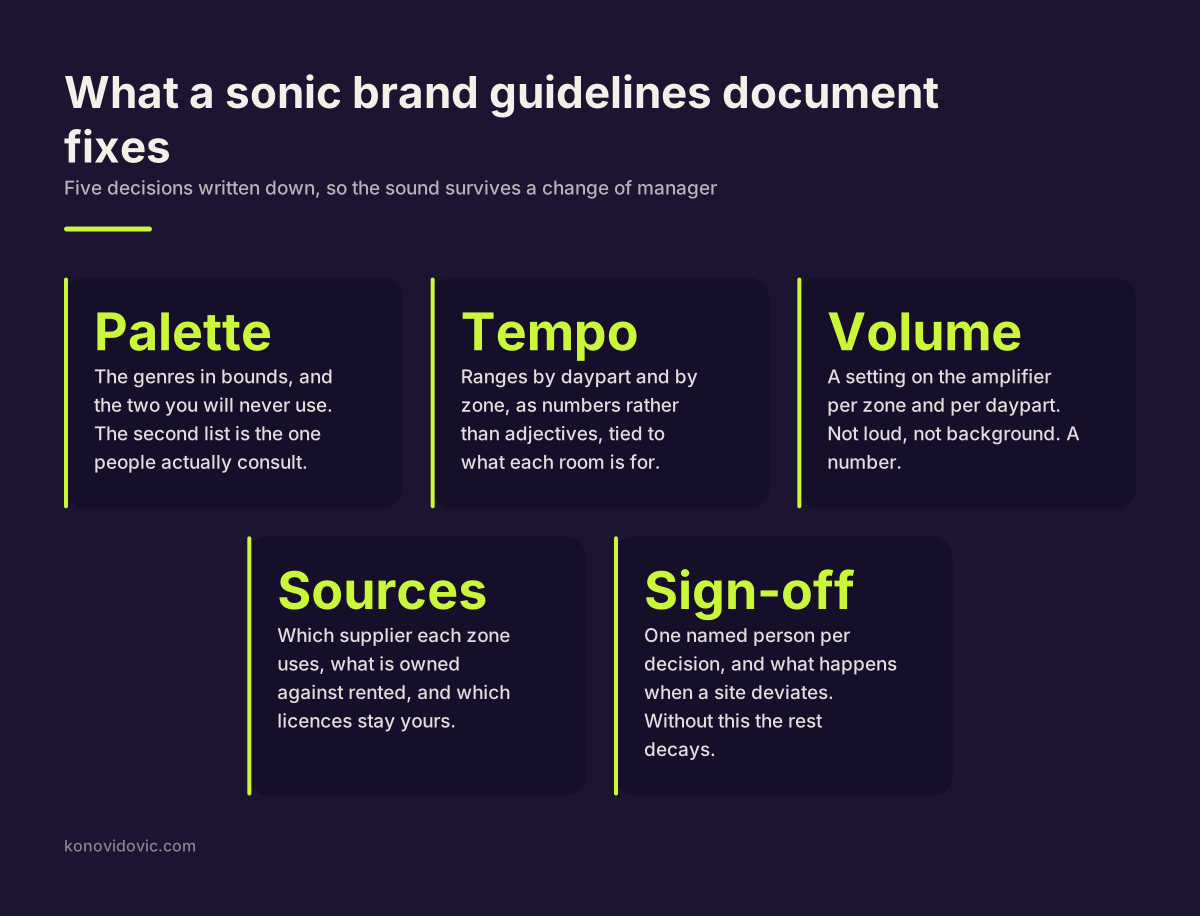
A sonic brand guidelines document fixes five things in writing: the genre palette, tempo by daypart, volume per zone, which sources feed which space, and who signs off on changes. It is the audio equivalent of a visual brand book, and the last item is the one that decides whether any of the other four survive.
I write these documents for clients, which is a different thing from writing about them. The honest observation after 34 years is that the musical parameters are the easy part. What makes a guidelines document work or fail is the governance section that most agencies leave out, because it is dull and because it commits somebody to something. If you want the strategy behind the document rather than the document itself, my guide to sonic branding covers how an identity is built. This page is about the artefact it produces.
What Is a Sonic Brand Guidelines Document?
It is a written standard for how a brand sounds, held centrally, that any site or agency can be held to. The distinction from a brief matters: a brief starts a project, and guidelines govern everything after it.
Most of what is published on this subject describes guidelines for a sound logo: a mnemonic, its short and long cuts, how it compresses for pre-roll. That is real work and almost no business needs it. The document I am describing governs what plays in rooms, for hours a day, in front of customers. Those are different problems and they produce different documents.
What Goes in the Document?
Five sections, in this order, because each one constrains the next.
- The palette. Genres in bounds, and the genres you will never use. The exclusion list is the one people actually consult, because it answers the question a manager has at nine on a Friday.
- Tempo by daypart and zone. Ranges as numbers, tied to what each room is for. My sonic branding guide sets out the ranges themselves and the commercial reasoning behind them, so the guidelines document cites them rather than re-arguing them.
- Volume per zone and per daypart. A number on the amplifier, not an adjective. “Background” means nothing at handover and less six months later.
- Approved sources. Which supplier feeds which zone, what is owned against what is rented, and what happens to the audio if a contract ends.
- Sign-off and deviation. One named person per decision, how a site requests an exception, and what happens when one is taken without asking.
Everything above the last item is musical. The last item is organisational, and it is why documents succeed or fail.
Guidelines, Brief and Playbook Are Not the Same Document
These three get conflated in proposals, usually to make one deliverable sound like three.
| Document | What it does | Who reads it |
|---|---|---|
| Sonic brief | Starts the work. Translates brand strategy into musical parameters for a specific build | The person making the music, once |
| Sonic brand guidelines | Governs the sound after the build. Fixes parameters, sources and authority | Site managers, new agencies, the next marketing lead |
| Operating playbook | Day-to-day instructions. Which zone, which schedule, what to do when the system fails | Duty managers, daily |
A quote that promises guidelines and delivers a brief has delivered the cheapest of the three. The test is simple: can someone who was not in the room run the brand’s music from it a year from now?
Who Signs Off, and on What?
One named person per decision, written into the document itself, with the deviation route next to it.
This is the section I argue about most. Clients want to write “Marketing” or “the brand team” because naming a person feels brittle. It is the opposite. A role cannot be asked a question on a Tuesday afternoon, and when nobody can be asked, the person nearest the tablet decides.
| Decision | Signed off by | Typical deviation route |
|---|---|---|
| Changing the genre palette | Brand owner, centrally | Not delegated. A palette change is a brand change |
| Adding or swapping a source | Brand owner, with the licence check repeated | Written request, because licensing follows the source |
| Volume outside the stated range | Site manager, logged | Permitted for a stated event, reverting the next day |
| Seasonal or event programming | Site manager, within the palette | Agreed in advance, with an end date in the calendar |
| Switching the music off entirely | Site manager | Always allowed. Silence is a valid programme |
That last row surprises people. A guidelines document that forbids silence produces rooms with music playing for no reason, which is worse than a gap.
How Does It Get Enforced?
Through the calendar and the contract, not through goodwill. A document nobody is scheduled to check is a document nobody checks.
- Put the refresh in the calendar, quarterly for tracks, annually for the rules. Not on complaint, because complaints arrive long after the drift started.
- Write it into supplier contracts. If an agency or music provider is delivering against the palette, the palette belongs in the agreement rather than in an email thread.
- Give each site a one-page extract. Nobody at site level reads a twenty-page document. They read the page with their zones, their numbers and the name to call.
- Check the rooms, not the system. Walk in at the hour you actually trade and listen. The dashboard will tell you the right playlist is assigned, and that is not the same question.
What a Guidelines Document Degrades Into
Predictably, and in roughly this order, if nobody owns it:
- A manager changes something on a slow Tuesday and does not write it down.
- A new manager deletes what they personally dislike and replaces nothing.
- Somebody adds a seasonal set in December that is still playing in March.
- A site signs its own supplier because the central one was inconvenient.
- Within three quarters, nothing playing anywhere reflects a decision anyone made deliberately.
None of those steps is unreasonable on its own. That is exactly why the document needs an owner rather than good intentions.
Who Actually Needs One?
Not every business, and I would rather say so than sell one.
- Multi-site operators. The moment there are three locations, consistency stops being automatic. This is the clearest case, and it is why hotel music consultancy produces this document as its main deliverable.
- Brands with agency turnover. If a new agency touches your audio every eighteen months, the document is the only continuity you have.
- Businesses where the room is the product. Hospitality, retail with dwell time, wellness.
And who does not: a single owner-operated venue where the person who chooses the music is the person who owns the business. Write the exclusion list on one page and spend the rest on the music itself.
Does the Document Cover Music Licensing?
No, and a guidelines document should say so explicitly rather than stay silent.
The sources section names which supplier feeds which zone. It does not and cannot grant public performance rights. Those stay with the business and are arranged per country: Buma/Stemra and Sena in the Netherlands through mijnlicentie.nl, TheMusicLicence from PPL PRS in the UK, GEMA and GVL in Germany, and separate ASCAP, BMI, SESAC and GMR licences in the United States.
I put a licensing line in every document I write, because the sources section is exactly where a reader might assume otherwise. Some commercial platforms bundle certain rights in certain territories, which varies by provider and country and belongs in your contract. Audio I supply is a music source and never a licence.
Key Takeaways:
- A sonic brand guidelines document fixes five things: palette, tempo by daypart, volume per zone, approved sources, and who signs off.
- The sign-off section is organisational rather than musical, and it decides whether the other four survive a change of manager.
- Name a person, not a department. A role cannot be asked a question on a Tuesday afternoon.
- A brief starts the work and guidelines govern it afterwards. A quote promising guidelines and delivering a brief has delivered the cheaper document.
- The document never covers your public performance licence, which stays yours and is arranged per country.
Frequently Asked Questions
What are sonic brand guidelines?
A written standard for how a brand sounds, covering the genre palette, tempo by daypart, volume per zone, which sources feed which space, and who has authority to change any of it. It is held centrally and any site or agency can be held to it, which is what separates it from a brief.
What is the difference between a sonic brief and sonic brand guidelines?
A brief starts a project and is read once by the person making the music. Guidelines govern the sound afterwards and are read by site managers, new agencies and whoever takes over marketing. The test is whether someone who was not in the room can run the brand’s music from the document a year later.
Who should sign off on sonic brand guidelines?
One named person per decision, written into the document. Palette changes stay with the brand owner centrally because a palette change is a brand change. Volume exceptions and event programming can sit with a site manager, logged and with an end date. Naming a department instead of a person is the most common reason these documents stop working.
How long does a sonic brand guidelines document stay valid?
The rules should hold for years while the tracks refresh quarterly. If the parameters themselves need changing every few months, the problem is that the brief was never settled, not that the document is out of date.
Do sonic brand guidelines include my music licence?
No. The document names which sources feed which zones, and that has no effect on your public performance obligation. The licence stays yours and is arranged per country. Any document or supplier implying otherwise is wrong, which is why I write the separation into the guidelines explicitly.
Does a single venue need sonic brand guidelines?
Usually not. If the person choosing the music owns the business, a one-page exclusion list and a volume number will do more than a formal document. Guidelines earn their cost from about three sites, or wherever the people making daily music decisions are not the people who set the brand.
Want the document written for your brand rather than described? Book a free discovery call and we will start with what your rooms sound like today, or see what music strategy consulting covers.


