 Kono Vidovic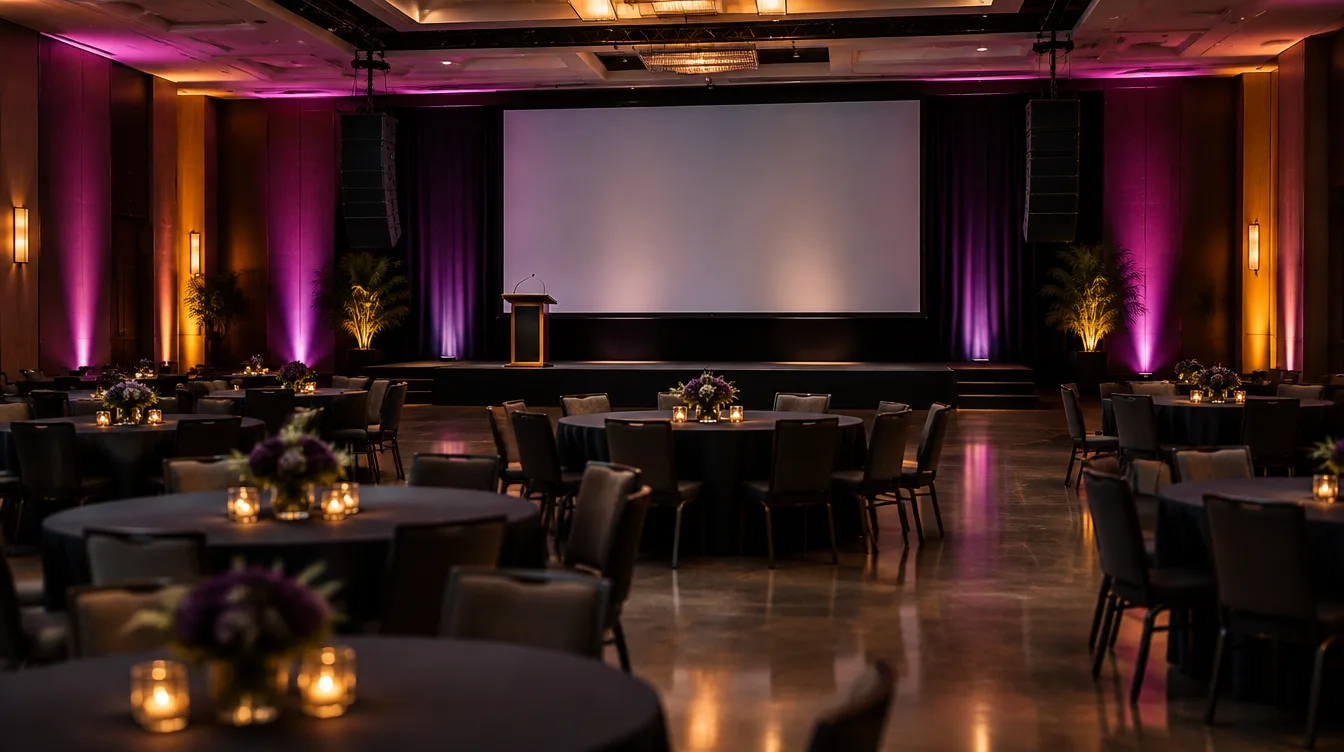
For most corporate events a DJ is the better choice, and the reason is continuity rather than cost: a band takes set breaks and a room that falls silent for twenty minutes empties. A band wins when the audience is seated, watching, and the entertainment is the event rather than the setting for it.
I should declare my interest before you read another line. I am a DJ, I do not supply bands, and I have 34 years of working alongside them at the same events. That makes me partial, so this page says plainly where a band beats me rather than pretending it never does. If you already know you want a DJ, booking enquiries start with your date, venue and finish time.
The Short Answer
Choose a band if the room will be seated and facing a stage for a defined block, and the entertainment is meant to be watched. Choose a DJ if the evening has to flow across arrival, dinner, speeches and dancing without gaps, or if the venue, the stage or the budget has constraints.
Most corporate briefs land on the second description without the organiser realising it, because a corporate evening is almost never one continuous performance. It is a sequence of segments with speeches in the middle.
Where a Band Genuinely Wins
I will start here, because the pages comparing these two are almost all written by suppliers of one or the other and none of them concede anything.
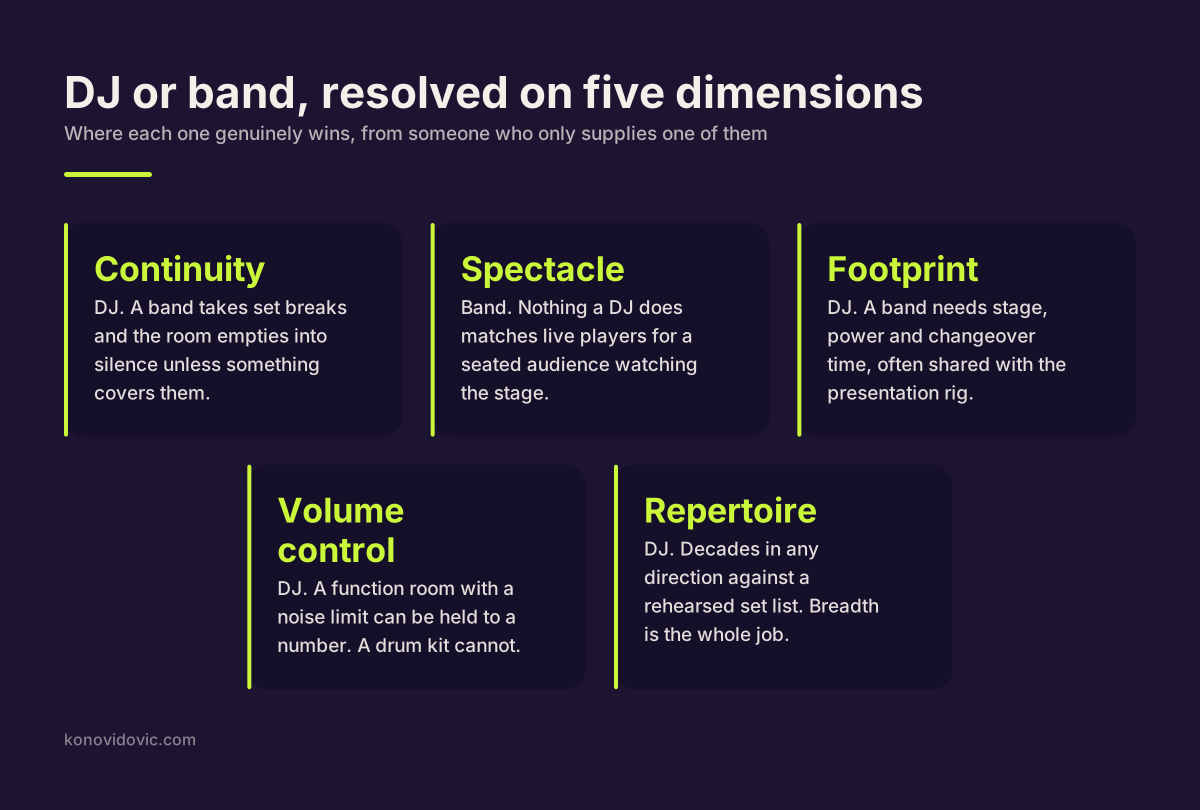
- Spectacle. Live musicians in front of a seated audience are something a DJ cannot replicate. If the room will be watching rather than talking, that is a band’s territory.
- A single defined block. An awards dinner with a 45-minute performance slot after the ceremony suits a band precisely, because the format is a show and the show has a start and an end.
- When the music is the gift. Some companies book entertainment as the reward itself rather than as the backdrop to a party. A band reads as something spent on the audience in a way a DJ does not.
- Acoustic resilience. A band can keep playing if the PA fails. A DJ cannot, and anyone who tells you otherwise has not had it happen.
If your brief matches those, book the band. I would rather say that than take a booking where the format is wrong.
Where a DJ Wins
DJ
- Plays continuously from arrival to close, with no breaks
- Fits a corner, needs one power feed, sets up in under an hour
- Volume held to a number the venue can live with
- Any decade, any genre, changed mid-evening if the room asks
- Reads the room and reacts within one track
Live band
- Set breaks of 15 to 25 minutes, usually twice
- Stage, power distribution, soundcheck and changeover time
- Drums set the floor volume and cannot be turned down
- A rehearsed set list, fixed weeks before the night
- Reacting means skipping or extending within that list
The set break is the one that decides most corporate events. A band plays two sets with a gap in the middle, and in that gap the room either sits in silence or listens to someone’s phone through the PA. People use the gap to leave. I have watched it happen often enough to treat it as the default outcome rather than a risk.
The Corporate Constraints Nobody Mentions
Three things apply at company events that almost never come up in the wedding-oriented comparisons.
- The stage already belongs to the AV company. If there are presentations, a lectern, screens and a comms rig, a band needs that same space after the formal programme ends. Someone has to own the changeover, and it takes longer than anyone allows for.
- Function rooms have noise limits. Hotels and conference venues frequently cap the level, sometimes with a limiter wired into the supply. A DJ can be held to a number. An acoustic drum kit sets its own floor and no amount of goodwill changes that.
- Procurement wants one line, not five. A band is often several invoices once you include sound, lights, travel and a sound engineer. That is not more expensive by itself, but it is more to approve, and it moves slower through finance than a single booking does.
What About Both?
It works, it is the strongest format, and it is the most expensive. Be deliberate about it rather than drifting into it.
The sensible version is a band for one defined slot and a DJ either side: the DJ covers arrival, dinner and speeches, the band plays their set as the centrepiece, and the DJ takes the room from the end of that set to the close. The gaps disappear, the spectacle still happens, and nobody is performing at a room that is not listening.
The version that goes wrong is booking both without agreeing who owns which minutes. Write the handover times into both contracts, agree whose equipment is used for what, and give the changeover a realistic slot in the running order.
| Format | Works best when | Watch out for |
|---|---|---|
| DJ only | The evening flows across segments, the venue is tight on space or volume, the budget is fixed | Nothing visually happening on stage, if that matters to the brief |
| Band only | A seated audience, a defined performance slot, spectacle is the point | The set breaks, the stage changeover, the volume floor |
| Both | Budget allows and the night has a clear centrepiece | Undefined handovers, duplicated equipment hire, an overrunning changeover |
How This Changes by Event Type
| Event | Usual answer | Why |
|---|---|---|
| Conference evening reception | DJ | Networking, continuous, people arriving and leaving throughout |
| Awards dinner | Both, or band for the slot | A seated audience and a natural performance window after the ceremony |
| Product launch | DJ | The product is the spectacle, and the music is the setting for it |
| Christmas party | DJ | Long evening, one continuous dance floor, wide age range to serve |
| Summer or team day | DJ | Outdoors, variable numbers, nobody seated and facing anything |
If you want the music planned across the whole programme rather than just the entertainment slot, my notes on music for corporate events cover the arc from arrival to close, and corporate event DJ hire covers what a DJ booking costs and what belongs in the brief.
Who Handles the Licence?
Usually the venue, and the format does not change that, but the answer shifts when the space is not a licensed venue.
At a hotel, conference centre or licensed venue, the premises licence covers recorded music and the DJ plays under it. Where it changes is an office, a warehouse, a marquee or any dry-hire space, where the obligation normally falls to the organiser. A live band performing other people’s songs is covered by the same premises licence, so this is not a reason to prefer one format over the other.
It varies by country: Buma/Stemra and Sena in the Netherlands through mijnlicentie.nl, TheMusicLicence from PPL PRS in the UK, GEMA and GVL in Germany, and separate ASCAP, BMI, SESAC and GMR licences in the United States. Booking either format never supplies a licence, and neither does buying a prepared mix. Ask the venue in writing which licence it holds.
Key Takeaways:
- For most corporate events a DJ is the better choice, because the evening is a sequence of segments rather than one performance and a band’s set breaks empty the room.
- A band genuinely wins on spectacle, on a single defined performance slot, and when the entertainment is meant to be watched rather than danced to.
- Three corporate constraints decide it in practice: the AV company already owns the stage, function rooms often cap the volume, and a band is usually several invoices.
- Booking both is the strongest format and the most expensive. It only works if the handover times are written into both contracts.
- The licence is normally the venue’s and the format does not change that, but at an office, warehouse or marquee it falls to the organiser and varies by country.
Frequently Asked Questions
Is a DJ or a band better for a corporate event?
A DJ for most of them. A corporate evening runs across arrival, dinner, speeches and dancing, and a DJ covers all of it without gaps, fits a smaller footprint and can be held to a venue’s volume limit. A band is the better choice when the audience will be seated and watching, and the entertainment is a defined performance slot rather than the backdrop to the night.
Why do set breaks matter so much?
Because a band typically plays two sets with a gap of fifteen to twenty-five minutes between them, and in that gap the room has nothing. People take it as a cue to leave, and a corporate event that empties at the break rarely refills. If you book a band, agree in advance what covers the gap.
Is a band more expensive than a DJ?
Usually, but the more useful difference is that a band is often several invoices once sound, lighting, travel and an engineer are included, where a DJ is normally one. That matters less to the total than it does to how fast the booking clears procurement.
Can we have both a DJ and a live band?
Yes, and it is the strongest format. The DJ covers arrival, dinner and speeches, the band plays a defined centrepiece slot, and the DJ takes the room to the close. It only works if the handover times are written into both contracts and the stage changeover gets a realistic slot in the running order.
Does the venue’s noise limit affect the choice?
Often decisively. Many hotels and conference venues cap the level and some enforce it with a limiter wired into the power supply. A DJ can be set to a number and held there. An acoustic drum kit sets its own volume floor regardless of what the limiter says, which can make a band impossible in that room.
Who arranges the music licence for a corporate event?
Normally the venue, and that is the same whichever format you book. At an office, warehouse, marquee or other dry-hire space the obligation usually falls to the organiser instead. It varies by country, so ask the venue in writing which licence it holds before the day.
Want the format decided against your actual venue and running order rather than in the abstract? Tell me the date, the venue and the programme and I will tell you honestly which one your event needs, or get in touch if you are still shaping the brief.