 Kono Vidovic
Sonic branding starts at around €800 for a documented sonic identity and rises with the number of touchpoints, locations and deliverables involved. A single custom mix built to a proper brief starts at €249. A music strategy and audit starts at €350. Those are my own rates, and I am publishing them because almost nobody in this field will.
That last part is the real reason this page exists. Search for what sonic branding costs and you land on a Reddit thread where composers ask each other what to charge, and on a handful of agency blogs that explain the value at length and then say “contact us for a quote”. After 34 years working with music professionally, I think that is a bad way to treat someone who is simply trying to budget.
So here is a straight answer. If you want the broader context on what sonic branding actually is before you think about money, start with my complete guide to sonic branding.
What you are actually buying
“Sonic branding” covers work that ranges from a five second audio logo to a multi-country programme with written standards for every space a brand occupies. Those are not the same purchase, and that is the single biggest reason published prices are so hard to find.
Here is how the work breaks down in practice, with what I charge for each.
| What you get | My price | Typical timeline | Right for |
|---|---|---|---|
| Music strategy and audit | From €350 | 1-2 weeks | Understanding what your brand should sound like before committing |
| One custom mix to a brief | €249 (60 min) | 7 days | Testing the approach in one space |
| 90 or 120 minute mix | €349 / €449 | 7 days | Covering a full service period |
| Documented sonic identity | From €800 | 4-6 weeks | A brand that needs consistency across spaces, staff and time |
| Ongoing programming | Monthly, on enquiry | Continuous | Venues that cannot run the same mixes for a year |
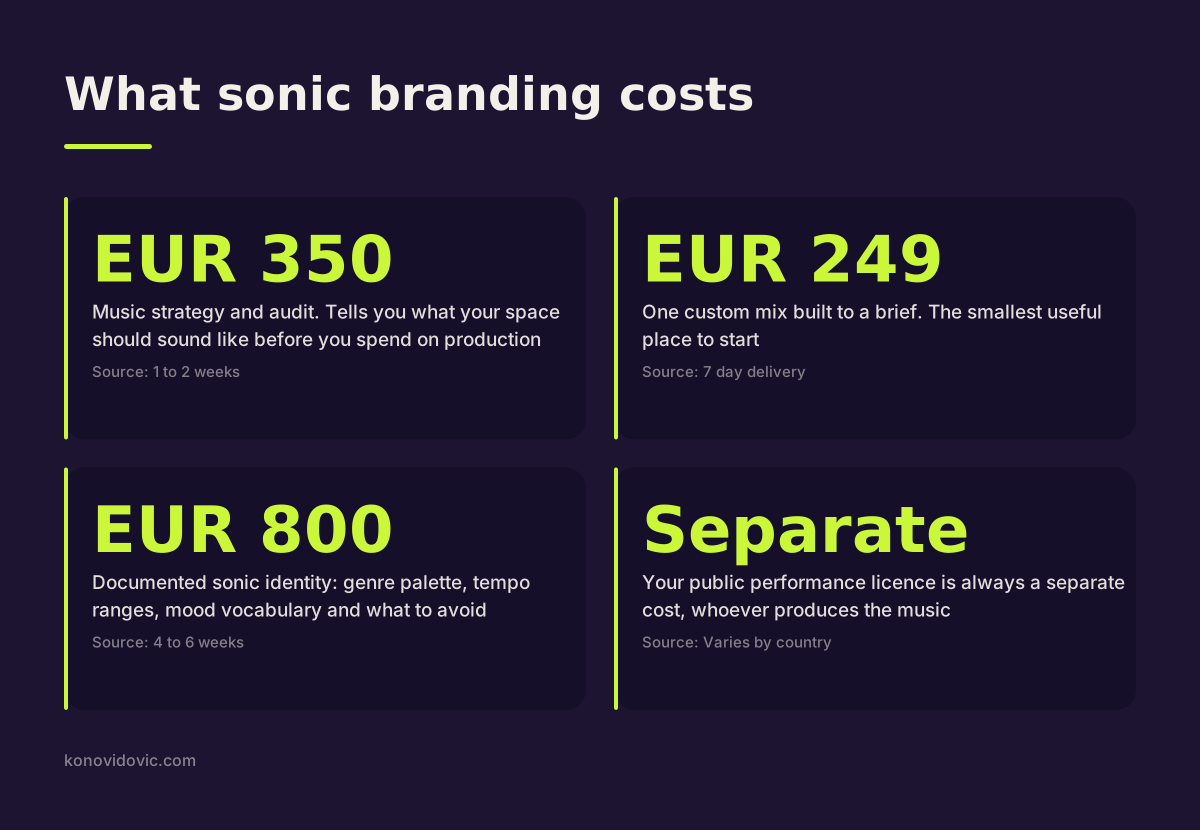
The bands widen from there. A brand with twelve locations, a spa, a restaurant and a members’ area is a different proposition from an independent cafe, and it is priced accordingly.
The four things that actually move the price
1. How many touchpoints you need covered
This is the biggest variable. A sonic identity for one room is a focused piece of work. A sonic identity that has to hold across a lobby, a bar, a restaurant, a spa, a lift, the hold music on your phone line and your social video is a system, with rules for how each one relates to the others.
Every additional touchpoint adds definition work, not just more music.
2. Whether you need documentation or just output
There is a real difference between “make my venue sound right” and “write down what my brand sounds like so anyone can maintain it”.
The first is production. The second is a document: genre palette, tempo ranges by context, mood vocabulary, reference artists, and an explicit list of what the brand should never sound like. That document is what stops your sound drifting when a manager leaves or a second location opens.
The documentation is the part that justifies the higher number, and it is also the part most people skip and later regret.
3. Whether an audio logo is involved
A sonic logo, the short signature that identifies a brand in three to seven seconds, is composition and production work rather than curation. It is a separate discipline with its own cost, and it sits on top of everything above.
Most businesses do not need one. Environmental music and written guidelines deliver the majority of the commercial effect for a customer-facing venue. An audio logo becomes worth it once you are running advertising and need a distinctive mark across media.
4. How many locations have to stay consistent
One venue is one brief. A group is a brief plus rules for local flexibility, plus a way to keep twelve managers from quietly putting on their own playlists.
Why nobody publishes their prices
Worth understanding, because it shapes every quote you will receive.
The work genuinely varies. A quote for a single cafe and a quote for a hotel group are not comparable, so agencies avoid publishing a number that will be wrong for most enquiries.
Value pricing. Larger agencies price against what the sonic identity is worth to the brand rather than against hours spent. That works, but it means a global name pays a multiple of what an independent restaurant pays for structurally similar thinking.
It keeps you on the phone. A quote request is a sales conversation. Some of that is legitimate, because the scoping genuinely matters. Some of it is not.
I price from a rate card because most of my clients are independent venues and small groups who need to know whether this is a €400 decision or a €4,000 one before they spend an hour on a call.
How to spend the smallest sensible amount
The mistake I see most often is a business commissioning a full identity before it knows what it wants. Here is the sequence that wastes the least money.
Start with a strategy and audit. You find out what your space currently sounds like, what it should sound like, and whether the gap is worth closing. From €350, and it makes every later decision cheaper.
Take the brief from the audit and commission a single mix for your busiest daypart. Run it for a month in the actual room. You will learn more in four weeks than in any amount of planning.
Once you know what works in practice, turn it into written guidelines. Documenting something you have tested produces a far better document than documenting a theory.
With guidelines in place, additional zones and locations are an application of an existing system rather than a new project each time.
You can start at step one for €350 and stop at any point. Nothing in that sequence is wasted if you go no further.
What a fair quote should include
Whoever you approach, hold them to this. If a quote does not say what is being delivered, it is not a quote.
That last line matters more than it looks. Which brings me to the thing most pages in this field leave out.
The cost nobody quotes you
A sonic identity is a music source and a set of rules. It is not a music licence.
If you play music in a commercial space where customers or staff can hear it, you generally need your own public performance licence, and that is true no matter who produced the music or how much you paid for it. Commissioning a sonic identity from me, or from anyone else, does not change that obligation.
Who you register with depends entirely on where you operate:
| Country | Who you register with |
|---|---|
| United Kingdom | TheMusicLicence, via PPL PRS Ltd |
| Netherlands | Buma/Stemra and Sena |
| United States | ASCAP, BMI, SESAC and GMR, separately |
| Germany | GEMA and GVL |
| Canada | SOCAN and Re:Sound, via Entandem |
| Australia | APRA AMCOS and PPCA, via OneMusic |
Budget for it separately, and check what applies in your country. I would rather you hear that from me before you commission than from a letter afterwards.
Is it worth the money?
For a venue, the useful way to think about this is over the life of the work, not as a single invoice.
A documented sonic identity does not expire. The mixes inside it get refreshed, but the genre palette, the tempo logic and the rules about what to avoid keep working for years, across staff changes and new locations. Spread over that, €800 is not a large number against what most businesses spend on their visual identity.
Decades of research, going back to Milliman’s work in the 1980s, has consistently found that music tempo influences how quickly people move through a space and how long they stay. The direction of that effect is well established. The specific percentages that circulate online vary wildly depending on who is repeating them, so I will not quote one at you.
What I will say from experience is simpler. Walk into two comparable venues at the same price point and notice how differently they feel. That difference is almost always the music, and it is almost always because one of them thought about it.
If you want to work out which bracket you fall into, a free discovery call is the fastest way. If you would rather start with the thinking, that is what music strategy consulting covers.
Key Takeaways:
- My sonic branding starts at €800 for a documented identity, €350 for a strategy and audit, €249 for a single custom mix
- Price is driven by touchpoints covered, whether you need documentation, whether an audio logo is involved, and how many locations must stay consistent
- Most agencies do not publish prices because scope genuinely varies and because a quote request is a sales conversation
- Buy the strategy before the production; a cheap audit makes every later decision cheaper
- A sonic identity is a music source and rules, never a substitute for your own public performance licence
- Judge the cost across the years the guidelines keep working, not as a one-off invoice
Frequently Asked Questions
How much does sonic branding cost?
My sonic branding work starts at €800 for a documented sonic identity. A music strategy and audit starts at €350, and a single custom mix built to a brief starts at €249. Full agency programmes for large brands cost considerably more, though very few agencies publish figures, so treat any single number you find online with caution.
Why do sonic branding agencies not publish their prices?
Three reasons. The scope genuinely varies enormously between a single cafe and a multi-location hotel group. Many agencies price against the value to the brand rather than against hours worked. And a quote request doubles as a sales conversation, which some firms are reluctant to give up.
What is the cheapest way to start with sonic branding?
A strategy and audit, from €350. It tells you what your space currently sounds like, what it should sound like, and whether closing that gap is worth it. Every decision after that becomes cheaper and better informed. You can stop there without having wasted anything.
Do I need a sonic logo?
Probably not, at least not first. A sonic logo is composition work with its own cost, and it mainly pays off once you are advertising across media. For a customer-facing venue, environmental music and written guidelines deliver most of the commercial effect for a fraction of the outlay.
How long does sonic branding take?
A strategy and audit takes one to two weeks. A full identity, from brief through to documented guidelines and the first mixes, usually runs four to six weeks depending on how many spaces are involved. A single custom mix is seven days from an approved brief.
Does the price include my music licence?
No, and be sceptical of anyone who implies it does. A sonic identity is a music source and a set of rules. Playing music in a commercial venue generally requires your own public performance licence, registered with the collecting society in your own country. Budget for that separately.
What is the difference between sonic branding and just buying a playlist?
A playlist is content. Sonic branding is the framework that decides what belongs in it and why, written down so it survives staff changes and new locations. You can buy a custom mix from €249 without a framework, and for a single room that is often the right call. Once you have more than one space, the framework is what stops them drifting apart.
Ready to elevate your music strategy? Contact Kono


