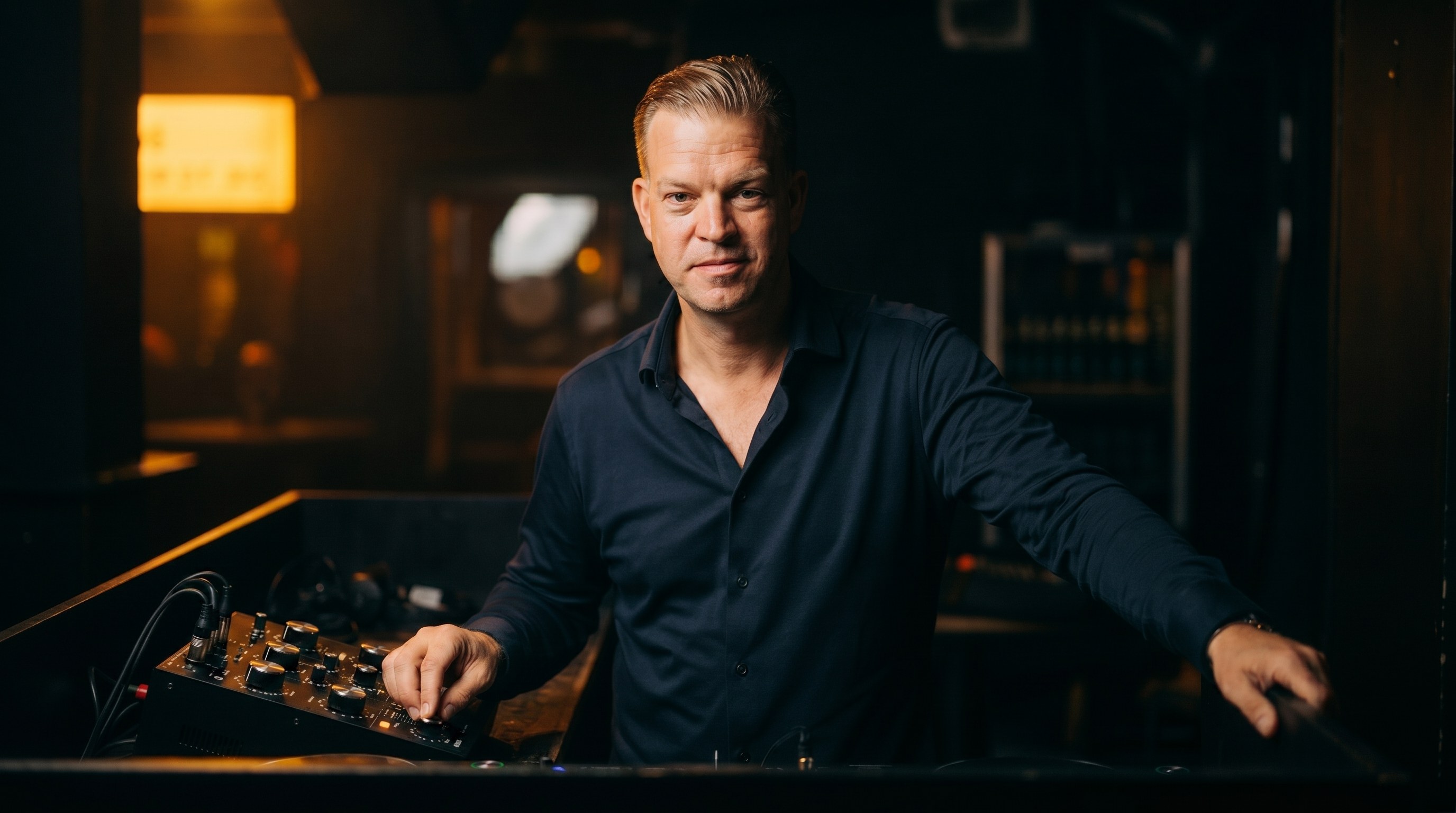
 Kono Vidovic
A restaurant playing recorded music in public needs its own public performance licence from its national collecting society, and no streaming subscription replaces it: Buma/Stemra and Sena in the Netherlands, TheMusicLicence in the UK, GEMA and GVL in Germany, and separate ASCAP, BMI, SESAC and GMR licences in the United States. Licensing confuses most owners not because it is complicated but because nobody explains it clearly. After 34 years working with venues across multiple countries, I see the same two mistakes everywhere: ignore it entirely, or assume the subscription covers it.
If you want to take a more comprehensive approach to how music serves your venue beyond just the legal side, music strategy consulting is the starting point. But first, the licensing basics.
Two Types of Rights, Two Organisations
The reason most venues end up registering with two separate organisations is that music rights are split between two distinct groups of rights holders.
Composition rights cover the musical work itself - the melody, the lyrics, the underlying song. These belong to composers, lyricists and music publishers. Collecting societies that handle composition rights exist in virtually every country. Examples include PRS for Music (UK), BUMA/Stemra (Netherlands), ASCAP and BMI (US), SOCAN (Canada), APRA AMCOS (Australia) and GEMA (Germany).
Recording rights (sometimes called neighbouring rights) cover the specific recording of that song - the performance you actually hear on a track. These belong to the performing artist and the record label. Separate organisations collect for this: PPL (UK), Sena (Netherlands), SoundExchange (US), Re:Sound (Canada) and PPCA (Australia).
Playing a recording in your restaurant involves both. You are using a composition and a specific recording of it. Both sets of rights holders have a claim. Both organisations need to be notified.
| Country | Composition rights | Recording rights |
|---|---|---|
| Netherlands | BUMA/Stemra | Sena |
| United Kingdom | PRS for Music | PPL |
| United States | ASCAP / BMI / SESAC | SoundExchange |
| Canada | SOCAN | Re:Sound |
| Australia | APRA AMCOS | PPCA |
| Germany | GEMA | GVL |
| France | SACEM | SCPP / SPPF |
This table covers major markets only. If you operate in a country not listed, search for “[country name] music collecting society” to find the relevant organisations. Most countries have them.
How Costs Are Calculated
Both types of organisations typically calculate fees based on a combination of factors: the size of your venue, your annual revenue or capacity, and how prominently music features in your business model. Background music in a restaurant is usually in a lower tariff category than featured entertainment or live performance venues.
Both organisations typically publish tariff tables on their websites, organised by establishment type. Many offer online calculators where you can input your venue details and get an estimated annual fee. Use these before you register so you know what to expect.
Costs vary widely by country and venue size. A small cafe in one country might pay the equivalent of a few hundred euros per year in total. A large restaurant group will pay significantly more. The only way to get an accurate figure for your specific situation is to use the calculator on the relevant organisation’s website.
Getting Registered
The process is similar across most countries, though the specific steps differ.
Find the collecting societies for both composition rights and recording rights in your country. If you operate in multiple countries, you need to register in each one.
You will typically need: your venue size in square metres or square feet, your annual revenue or an estimate, your venue type, and your business registration number.
Use the online calculators on each organisation's website. Select the category that matches your use - background music in a restaurant is typically a lower tariff than featured live music.
Complete the online registration for each organisation separately. You will receive confirmation and an invoice. Keep these on file - you may need to show them if an inspector visits.
Most licences renew annually. Set a calendar reminder 6-8 weeks before your renewal date so you have time to update any changed venue details and process payment without a gap in coverage.
Your Music Source is a Separate Question
Having the correct registrations does not automatically make any music source appropriate for your venue. Registrations cover your venue’s right to play music publicly - they do not cover the source of that music.
A personal Spotify subscription is for private use only under its terms of service. Playing it in your venue is outside those terms regardless of your licensing status. You need a music source that is appropriate for commercial use alongside your registrations - a commercial streaming service, a licensed music service, or professionally produced music.
The combination that covers you is: a music source appropriate for commercial use, plus your registrations with the relevant collecting societies. Both are needed. Neither alone is sufficient. If the vocabulary itself is the confusing part, I have set out what commercial background music actually means and what each of the four sources does and does not cover.
Key Takeaways:
- Music rights are split between composition rights and recording rights - most venues need to register for both
- Every country has its own collecting societies - find the right organisations for where you operate
- Registrations cover your venue’s right to play music publicly; your music source is a separate question
- Personal streaming accounts are for private use only - a commercial music source is needed alongside your registrations
- Register before you open; retroactive registration is possible but costs more
What Your Licence Does Not Cover
A public performance licence covers playing recorded music in your venue. It does not cover everything else you might want to do with music, and the gaps catch venues out most often on social media.
Four things it generally does not include:
- Putting music behind your own video. Using a track in a promotional clip is synchronisation, a separate right negotiated with the rights holders rather than covered by your venue licence.
- Streaming or broadcasting from the venue. A livestream from your floor reaches an audience beyond the premises, which sits outside a standard premises licence.
- Charging admission for a music event. Ticketed events are usually tariffed differently from background music, so tell your society before you run one.
- Live performance. A band playing covers is a different tariff again, and it is the venue rather than the band that normally carries it.
If you are planning any of these, ask your society first rather than afterwards. Adding an event to an existing licence is routine. Explaining one after it has happened is not.
Frequently Asked Questions
Do I need to register in every country where I have venues?
Yes. Music licensing is territorial. A registration in one country does not cover your venues in another. Each country has its own collecting societies and you need to register with them separately for each territory where you operate.
What if a commercial streaming service says it covers the licensing?
Some commercial services negotiate directly with collecting societies and include certain rights in their subscription for specific territories. Others do not, or only cover some of the rights you need. Always verify explicitly what a service covers in your specific country. Do not assume - confirm it in writing or by checking their terms carefully.
Does a DJ mix change my licensing obligations?
No. A custom DJ mix replaces your streaming service as a music source. Your venue’s licensing obligations with the relevant collecting societies remain the same regardless of where your music comes from. The mix is a music delivery format, not a licensing solution.
What happens if an inspector visits and I am not registered?
Collecting societies in most countries have inspection programmes. If a venue is found operating without the required registrations, the typical outcome is a claim for back-payment covering the period of unlicensed use, often with additional costs. The amount varies by country and by how long the venue had been operating without registration. Registration before the fact is always cheaper.
Is live music licensed differently?
In most countries, yes. Live performance typically still requires registration for composition rights (because the songs are being performed), but recording rights may not apply if no recordings are being made or played. The rules vary by country. Check with your local collecting societies for how live performance is treated in your territory.
How do I find the collecting societies for my country?
Search for “[your country] music collecting society” or “[your country] public performance licence music.” The International Confederation of Societies of Authors and Composers (CISAC) also maintains a directory of member societies worldwide at cisac.org.
Licensing stays with you and your collecting society, whatever you play. Where I am useful is the music itself: a custom DJ mix from EUR 249 built for your room, or the wider picture on my music for restaurants page. Get in touch if you want a second opinion on your setup.