 Kono Vidovic
Curated music for brands is a service with four deliverables: a written brief, sequenced audio built against it, a set of operating rules, and nothing at all about your licence. Most agency pages in this market describe the feeling and skip the invoice. This one describes what arrives.
I have been selling this work for 34 years, which is long enough to know that the word curation does a lot of hiding. It can mean a human picked every track for your room, or it can mean someone set a mood slider on a platform you could have set yourself. If you want the work done rather than explained, music strategy consulting is the service. This page is so you can tell the two apart before you pay for either.
What Are You Actually Buying?
You are buying a decision record and the audio that implements it, not a playlist. The audio is the visible part and the least durable. The brief and the rules are what make the purchase survive the person who made it.
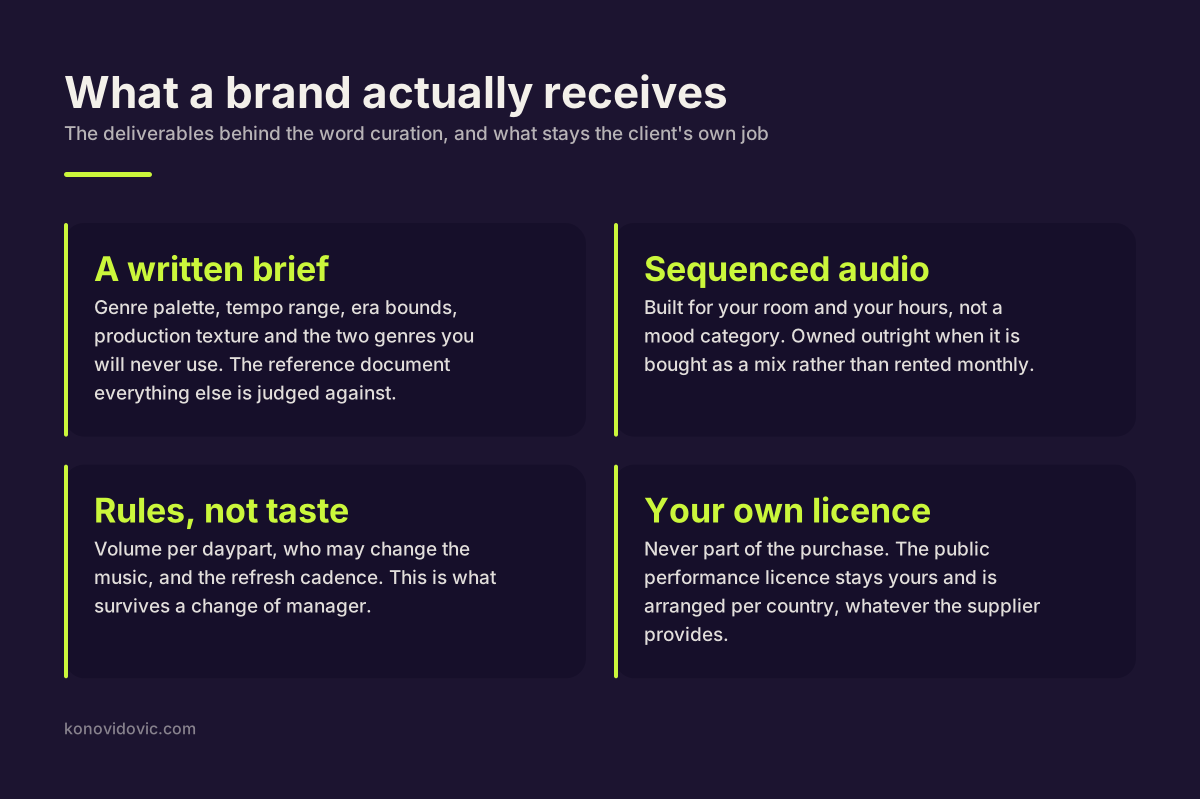
The four parts, and why each one matters:
- The brief. Genre palette, tempo range, era bounds, production texture, and the two genres you will never use. Written down, because an unwritten brief is a preference and a written one is a standard.
- The audio. Sequenced for your hours and your room rather than assembled from a mood category. This is the part people think they are buying.
- The rules. Volume per daypart, who is allowed to change the music, and how often it is refreshed. Dull, and the reason any of it still works in a year.
- The licence, which is not included. No supplier can sell you your public performance rights. More on that below, because the market is vague about it on purpose.
If a quote covers only the second item, you are buying a playlist with a better adjective.
Curation, Sonic Branding and a Playlist Are Three Different Purchases
They sit at different prices and solve different problems, and the words are used interchangeably by people who benefit from the confusion.
| Purchase | What it produces | When it is the right buy |
|---|---|---|
| A playlist | A list of tracks, in some order | You need something playing tomorrow and the room is low stakes |
| Curated music | A brief, sequenced audio and operating rules for a specific space | The space is a customer-facing part of the brand and you want it deliberate |
| Sonic branding | An owned audio identity: sound marks, a logo sound, guidelines across every touchpoint | The brand appears in film, app, product and retail and must sound like itself in all of them |
Curated music is the middle purchase and the one most businesses actually need. If you are weighing the third, my guide to sonic branding sets out what that work involves and where it stops being worth it.
What Does Curated Music Cost?
My own published rates, which exist because almost nobody in this market publishes any:
| Deliverable | Price | Unit |
|---|---|---|
| Sequenced mix, 60 minutes | EUR 249 | Per mix, one-off, excludes VAT where applicable |
| Sequenced mix, 90 minutes | EUR 349 | Per mix, one-off, excludes VAT where applicable |
| Sequenced mix, 120 minutes | EUR 449 | Per mix, one-off, excludes VAT where applicable |
| Strategy and guidelines work | Request a quote | Scoped per brand |
| Public performance licence | Set by your collecting society | Per premises, per year, not sold by me |
The structural choice is between paying once and owning the audio, or paying monthly and renting it. A chain with forty sites usually wants the subscription, because coverage and scheduling across sites is the actual problem. A single flagship with a settled identity usually does better owning a custom mix from EUR 249, because the monthly fee never stops and the curation was built for a segment rather than for the room.
What Does the Research Actually Support?
Less than the sales decks claim, and enough to matter. Two findings are worth naming because they survive scrutiny.
- North, Hargreaves and McKendrick (1999), Journal of Applied Psychology 84:271-276. French and German music played on alternate days beside a display of French and German wines shifted which country’s wine sold. Customers questioned afterwards had no idea the music had influenced them.
- Krishna (2012), Journal of Consumer Psychology 22:332-351. An integrative review of sensory marketing, arguing that sensory cues can act as subconscious triggers shaping how people judge abstract qualities such as sophistication and quality. It is a review of the field rather than a single experiment, so it supports the direction and does not supply a number.
I deliberately quote no percentage for either. The figures that circulate for both are inflated in the retelling, and a supplier quoting you a precise uplift from a 1999 field study is telling you something about their sourcing rather than about your business.
The useful conclusion from the first study is uncomfortable for the whole category: the customers could not report the effect. That means asking your customers what to play is a poor instrument. Judge the work on dwell time, on repeat visits and on whether staff can take an order without leaning in.
Who Is This Worth Buying For?
Not everyone. The honest list:
- Hospitality with a defined position. A hotel, restaurant or bar where the room is part of the proposition rather than a container for it.
- Retail with dwell time. If people browse, the soundtrack is doing work. If they queue for ninety seconds, it is not.
- Brands with a content output. Where the same sonic character has to carry across a space, a film and a social cut.
- Multi-site operators who have lost control. Where every manager has quietly made their own choices and nobody can say what the brand sounds like.
And where it is not worth it: a quiet office, a space where music is background to a legal obligation rather than an experience, or any room where the honest answer is silence.
What to Check Before You Sign
The fourth question is the one that gets the vaguest answers, which is the next section.
Does Curated Music Cover My Licence?
No. Buying curated music changes where your music comes from and has no effect on your public performance obligation, which stays yours and is arranged nationally.
In the Netherlands that is a combined Buma/Stemra and Sena licence, arranged through mijnlicentie.nl. In the UK it is TheMusicLicence from PPL PRS. In Germany you need both GEMA and GVL. In the United States there is no joint venture, so ASCAP, BMI, SESAC and GMR are separate licences.
Some commercial music platforms do bundle certain rights in certain territories, and that is a real part of what you pay them for. What they cover varies by provider and by country, so get the scope into your contract rather than taking it from a sales page. A custom mix from me is a music source and never a licence, and I say that before you book rather than after.
Key Takeaways:
- Curated music for brands has four deliverables: a written brief, sequenced audio, operating rules, and your own licence, which is never included.
- If a quote covers only the audio, you are buying a playlist with a better adjective.
- A playlist, curated music and sonic branding are three different purchases at three different prices, and the words are used interchangeably by people who benefit from that.
- Published rates are EUR 249, EUR 349 and EUR 449 for 60, 90 and 120 minutes, delivered in seven days from an approved brief.
- North and colleagues showed customers cannot report the effect of music on their choices, so customer feedback is the wrong way to judge a soundtrack.
Frequently Asked Questions
What is curated music for brands?
A service that produces a written brief, audio sequenced against it, and rules for running it, for a specific commercial space. The distinguishing feature is that a person made and recorded the decisions, so the result can be handed to a successor rather than living in one manager’s taste.
How is it different from a playlist?
A playlist is a list of tracks. Curated music is a decision record plus the audio that implements it, built for your hours and your room rather than for a mood category. The practical test is whether anything survives the person who made it. A playlist usually does not.
What does curated music for brands cost?
My sequenced mixes are EUR 249 for 60 minutes, EUR 349 for 90 and EUR 449 for 120, paid once and owned, delivered seven days from an approved brief. Strategy and guidelines work is scoped per brand. Your public performance licence is a separate annual cost set by your national collecting society, not by me.
Does buying curated music cover my music licence?
No. It changes your music source and does nothing to your public performance obligation. You still need your own licence: Buma/Stemra and Sena in the Netherlands, TheMusicLicence in the UK, GEMA and GVL in Germany, and separate ASCAP, BMI, SESAC and GMR licences in the United States. Any supplier implying otherwise is wrong.
Do I own the music after I pay for it?
With a one-off mix from me, you own the delivered audio and keep using it if we never work together again. With a subscription service you are renting, and the music stops when the contract does. Ask the question in those words before you sign, because the proposal will rarely volunteer the answer.
How often should curated music be refreshed?
Refresh the tracks quarterly and keep the rules fixed for years. The brief should outlive the audio. Changing the sound every few weeks means nobody is programming, and never changing it means staff are tired of it long before customers notice.
Want music chosen for your brand rather than for a category? Book a free discovery call and I will tell you honestly whether this is worth buying for your space, or order a custom mix from EUR 249 if you already know what you need.


