 Kono Vidovic
Commercial background music is music played in a business where the public can hear it, which is a legally different act from listening to music and needs different permission. The music itself is the same. What changes is that playing it in a shop, bar, gym or office reception is a public performance, and that requires a licence no consumer subscription includes.
I have spent 34 years putting music into commercial spaces, and this is the single most misunderstood corner of the job. Owners are not being careless. The industry uses words like royalty-free and licensed in ways that sound reassuring and mean something narrower than people assume. This page sorts out the vocabulary.
What Is Commercial Background Music?
Commercial background music is any recorded music played in a business where customers, clients or the public can hear it. The category exists because the law treats playing music to other people differently from listening to it yourself, not because the music is a special kind of music.
That distinction is the whole thing. It does not depend on:
- Whether you charge for it. A free waiting room counts.
- How loud it is. Quiet background music in a corridor counts.
- How many people hear it. A two-table cafe counts.
- Whether it is your own taste. Playing your personal favourites counts.
What it does depend on is whether people other than your household can hear it in a commercial setting. In most countries that makes it a public performance, and a public performance needs its own licence.
Why Consumer Music Is Not Commercial Music
A consumer subscription is licensed for personal, non-commercial use, and that is a term of the service rather than an interpretation. Using it in a venue breaks the agreement you accepted, separately from any question about collecting societies.
This catches people out because nothing stops you. The app works, the music plays, and no warning appears. But two distinct obligations are being missed at once:
- The terms of service. Your consumer subscription says personal use. A venue is not personal use, so you are outside your agreement with the platform.
- The public performance right. Even with a perfectly valid commercial music source, your premises needs a licence from the collecting societies in your country.
Fixing only the first does not fix the second. That is the mistake I see most often: a venue upgrades to a business music service, assumes it is now covered, and never registers with its society.
The Four Sources, and What Each One Covers
There are four realistic ways a business gets music, and they differ far more on rights than on catalogue.
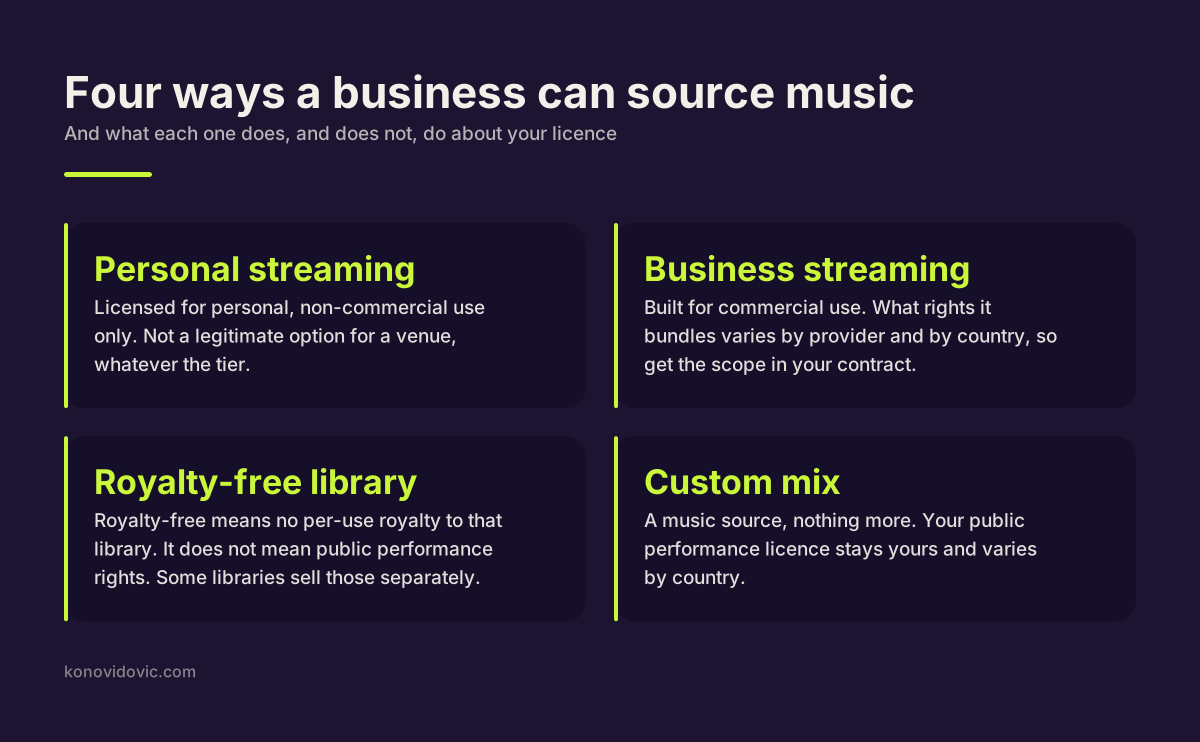
| Source | What it is | Public performance licence |
|---|---|---|
| Personal streaming | A consumer Spotify or Apple Music account | Not covered, and outside the terms of service |
| Business streaming | A B2B provider such as Soundtrack Your Brand or Mood Media | Varies by provider and country. Get the scope in writing |
| Royalty-free or stock library | A catalogue licensed for a one-off fee | Usually not included. Some libraries sell it separately |
| Custom mix | Sequenced audio built to your brief | Not covered. It is a music source, not a licence |
The only row where the answer is genuinely “it depends” is business streaming. Some commercial providers do bundle certain rights in certain territories, and that is a real part of what you pay for. What they cover varies, so ask which licences are included, in which countries, and which remain yours, and get that answer in your contract rather than from a sales page.
What Does Royalty-Free Actually Mean?
Royalty-free means you pay once rather than paying a royalty every time the music is used. It does not mean free of rights, and it does not normally include the public performance right you need to play that music in your venue.
This is the most expensive misunderstanding in the category, because the name sounds like it settles everything. It settles one thing: your relationship with that library. A standard royalty-free licence covers using the music, typically synchronised to your own content. Public performance is a separate right and is rarely part of it. Some stock libraries recognise this and sell a separate public performance licence alongside the standard one, which tells you the two are not the same product.
The practical consequence for a venue:
- Check what your library’s licence actually grants. The words to look for are public performance, not commercial use, which is vaguer.
- Ask whether the works are registered with a collecting society. Some libraries build catalogues specifically from unregistered works, which changes the answer. Others do not.
- Ask your own society. They will tell you what your premises needs regardless of what any supplier claims.
Royalty-free is a pricing model. It is not a legal status, and treating it as one is how venues end up surprised.
What Does a Public Performance Licence Cover?
It covers playing recorded music publicly at your premises, and it is arranged nationally rather than globally. If you operate in more than one country, it is a separate obligation in each.
| Country | Societies | Licence name |
|---|---|---|
| Netherlands | Buma/Stemra and Sena | Arranged via mijnlicentie.nl |
| UK | PPL and PRS for Music | TheMusicLicence from PPL PRS |
| Germany | GEMA and GVL | Separate, both required |
| Canada | SOCAN and Re:Sound | Entandem |
| Australia | APRA AMCOS and PPCA | OneMusic Australia |
| United States | ASCAP, BMI, SESAC, GMR | No joint venture, separate licences |
Two things it generally does not cover, which catch venues out on social media: putting music behind your own promotional video, which is synchronisation and negotiated separately, and running a ticketed music event, which is usually tariffed differently. Tell your society before either, not after.
How Do You Choose a Source?
Choose on cost structure and control, then settle the licence separately, because the licence question has the same answer in almost every case: it is yours.
A business streaming service suits an operator with many sites who wants coverage and scheduling without thinking about it, billed monthly forever. A custom DJ mix from EUR 249 suits a single venue with a settled identity, paid once and owned, built for that room rather than for a segment. A royalty-free library suits someone whose main need is music behind their own video content rather than in a room.
If you want that comparison worked through properly for your type of business, my guide to retail and venue music systems covers the costs, and my notes on building a business playlist strategy cover the rules that keep it working afterwards.
Key Takeaways:
- Commercial background music is music the public can hear in a business, which is a public performance and needs its own licence.
- A consumer subscription is licensed for personal use only, so using one in a venue breaches the terms and leaves the licence question unanswered.
- Royalty-free means no per-use royalty, not public performance rights. Some libraries sell those separately, which tells you they are different products.
- Business streaming services sometimes bundle rights, but what and where varies, so get the scope in your contract.
- Whatever the source, the public performance licence is yours, arranged per country. A custom mix is a music source and never a licence.
Frequently Asked Questions
What counts as commercial background music?
Any recorded music played in a business where customers, clients or the public can hear it. It does not matter whether you charge admission, how quiet it is, how few people are present, or whether it is your own taste. If people outside your household can hear it in a commercial setting, it is a public performance in most countries.
Can I use Spotify as background music in my business?
Not a personal subscription. It is licensed for personal, non-commercial use, so a venue is outside those terms. Spotify and others offer business products, and there are dedicated commercial providers, but you also need your own public performance licence from your national collecting society, which is a separate obligation from your music source.
Does royalty-free music need a licence to play in a shop?
Usually yes. Royalty-free means you pay a one-off fee instead of ongoing royalties to that library. A standard royalty-free licence does not normally include public performance rights, which is why some stock libraries sell a separate public performance licence. Check what your library’s agreement actually grants and confirm with your own collecting society.
Does a business music service include my licence?
Sometimes, partly, and it depends on the provider and the country. Some commercial services bundle certain rights in certain territories, which is genuinely part of what you pay for. Ask which licences are included, in which countries, and which remain yours, and get the answer in your contract rather than from a sales page.
How much does a public performance licence cost?
That is set by your national collecting society, not by your music supplier, and it is generally calculated from things like premises size, capacity and how the music is used. I deliberately do not quote figures, because the numbers circulating online come from resellers rather than from the societies. Ask yours directly.
Is a custom mix a way around licensing?
No, and anyone telling you otherwise is wrong. A custom mix changes where your music comes from. It has no effect on your public performance obligation. I supply the music, you arrange the licence, and I say so before you book rather than after.
Want music built for your room rather than for a category? Order a custom DJ mix from EUR 249, or get in touch and I will tell you honestly what your space needs.


