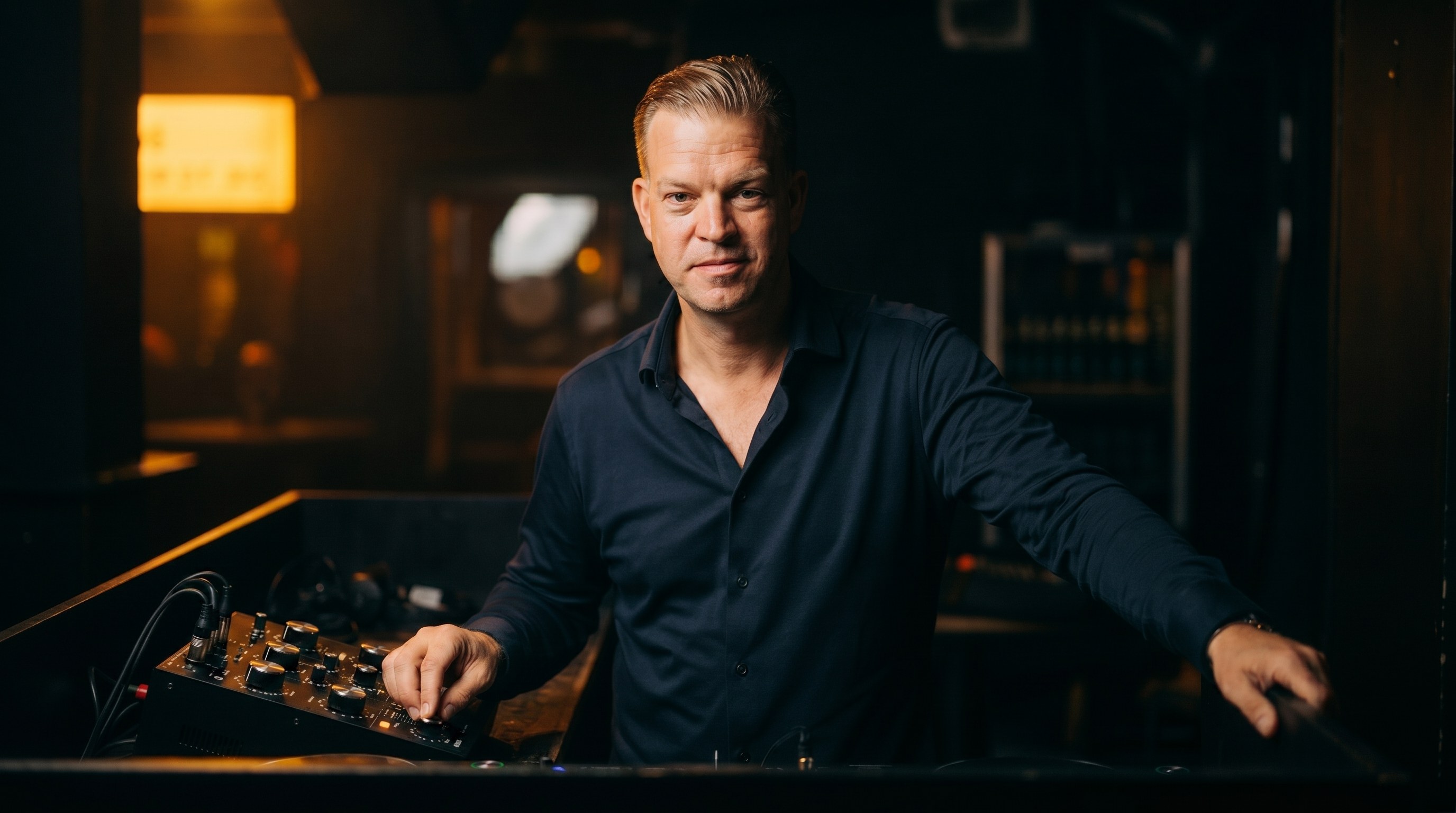
 Kono Vidovic
In the age of algorithms and artificial intelligence, the human music curator has not become obsolete - if anything, their value has increased. As the volume of available music has grown exponentially (Spotify alone adds 100,000 tracks per day), the ability to meaningfully filter and contextualise that music has become rarer and more valuable. But what exactly is a music curator, and what do they actually do?
For a closer look at the playlist curators who work specifically within streaming platforms, read the companion piece on playlist curators: the unsung heroes of music streaming. If you’re a brand or business looking for curation services, get in touch to discuss your needs.
Types of Music Curators: Who They Are and What They Deliver
| Type of Curator | Where They Work | What They Deliver | Who Hires Them |
|---|---|---|---|
| Editorial playlist curator | Streaming platforms (Spotify, Apple Music) | Flagship editorial playlists with millions of followers | Platform employed or contracted |
| Independent playlist curator | Personal playlists on streaming platforms | Niche playlists with engaged, loyal audiences | Labels, artists, PR agencies |
| Brand / business curator | Commercial environments (retail, hospitality, events) | Sonic identity playlists, DJ mixes, music strategy | Businesses, hotels, restaurants |
| DJ / curator | Live events, clubs, festivals | Live performance + recorded mixes | Event promoters, venues, private clients |
| Music supervisor | Film, TV, advertising, games | Licensed music selections for productions | Directors, producers, ad agencies |
| Radio programmer | Broadcast radio stations | Station playlists and scheduling | Radio networks |
Defining the Music Curator
A music curator is a person with deep musical knowledge who selects, organises and contextualises music for a specific audience, purpose or context. The term comes from the art world - museum curators select and arrange artworks - and the parallel is apt. Just as a great museum curator doesn’t just collect interesting objects but creates a coherent, meaningful experience through selection and arrangement, a music curator doesn’t just compile tracks but shapes an experience through intentional choices.
Music curators work in multiple contexts:
- Editorial playlist curators at streaming platforms (Spotify, Apple Music, Tidal)
- Independent playlist curators who build influential playlists outside of major platforms
- Brand music curators who create sonic identities for businesses
- DJ/curators who combine live performance with curatorial expertise
- Radio programmers who build station playlists and schedules
- Music supervisors who select music for film, television and advertising
What Music Curators Actually Do
The work of a music curator is far more than picking favourite songs. A professional curation process involves:
- Research: Staying constantly connected to new music - releases, emerging artists, cultural trends - across multiple genres and markets. This requires active listening across streaming platforms, physical media, clubs, live events and international sources.
- Selection: Applying deep criteria to track selection that goes beyond “this is a good song” to “this is the right song for this specific context, audience and purpose.”
- Sequencing and flow: Arranging selected tracks in an order that creates a coherent listening experience with intentional emotional arc, tempo progression and mood transitions.
- Contextualisation: Understanding and communicating what makes a piece of music significant - its cultural context, its emotional register, its relationship to other music in the selection.
- Maintenance: Keeping playlists and mixes relevant through regular updates, removals and additions that respond to cultural changes and audience evolution.
Curators vs. Algorithms
The algorithm vs. human curation debate is one of the most active in the music industry. The honest answer is: they serve different purposes and work best in combination.
Algorithms excel at:
- Personalisation at scale (one algorithm can serve 450 million Spotify users simultaneously)
- Pattern recognition in vast datasets
- Identifying music that statistically resembles what a listener has already enjoyed
- Efficient discovery of music from the catalogue
Human curators excel at:
- Cultural insight and contextual understanding
- Creating experiences rather than just tracks
- Taste, editorial voice and brand identity
- Bridging multiple genres and eras in ways algorithms struggle with
- Understanding the “why” of music, not just the “what”
The most effective music experiences typically involve both - algorithmic efficiency and human editorial judgement working together. This is explored in depth in the guide on algorithm vs human curation: which playlist wins?
The Growing Importance of Curation
Paradoxically, the abundance of music has made curation more valuable, not less. When 100,000 tracks are added to Spotify every single day, the challenge is no longer access - it’s selection. Music fans and businesses alike are increasingly overwhelmed and are seeking trusted curators who can navigate the flood on their behalf.
For businesses, this represents a genuine opportunity. A brand with a distinctive, expertly curated music identity stands out in environments where competitors are all playing the same generic streaming playlists. For artists, getting on the right curated playlist can be career-changing. Explore what a professional music strategy consulting engagement looks like and how it can work for your business.
Key Takeaways:
- Music curators select, organise and contextualise music for specific audiences and purposes
- Their work involves research, selection, sequencing, contextualisation and maintenance
- Algorithms and human curation serve complementary, not competing, functions
- Music abundance makes curation more valuable, not less
- Business music curation is a high-ROI investment in an era of sonic clutter
How Do You Brief a Music Curator?
Give a curator the constraints rather than the songs. The most common mistake in a brief is a list of tracks the client likes, which tells me about their taste rather than about their room, and taste is the least useful input I can be given.
What actually helps:
- The room and the hours. A 40-cover restaurant serving from six until eleven is a different brief from a 200-capacity bar that fills at ten.
- Who is in it. Not a demographic bracket. The actual people, described the way staff would describe them.
- What it must not sound like. Exclusions are more useful than preferences. Two named genres you never want is worth more than ten artists you like.
- The decision you want to change. Longer stays, faster turnover, more second drinks, a quieter room. These pull in different directions and a curator needs to know which one wins.
What Does Working With a Curator Cost?
Curation is sold either as a deliverable or as an ongoing relationship, and the two are priced differently. These are my published rates, in euros, as of 2026. For the buyer’s view of the same question, what actually arrives and what stays your own job, see curated music for brands.
| What you get | Price | Unit | Qualifier |
|---|---|---|---|
| Custom mix, 60 minutes | EUR 249 | Per mix | Excludes VAT where applicable |
| Custom mix, 90 minutes | EUR 349 | Per mix | Excludes VAT where applicable |
| Custom mix, 120 minutes | EUR 449 | Per mix | Excludes VAT where applicable |
| Ongoing curation programme | Indicative, request a quote | Per project | Scope depends on zones and refresh cadence |
One separation worth stating, because suppliers in this field routinely blur it: a curator supplies the music, not the right to play it. Your venue still needs its own public performance licence, which varies by country.
A final word on when you do not need a curator. If your space plays music for two hours a day at low volume and nobody has ever commented on it, a well-chosen streaming station and a correct licence will serve you fine. Curation earns its cost where music is doing real work: long trading days, multiple zones, a brand that people are paying a premium to be inside, or a room whose energy has to change across the evening. Everywhere else it is a nice-to-have, and I would rather tell you that than sell you something you do not need.
Frequently Asked Questions
How do you become a music curator?
There’s no single path. Most music curators develop through deep personal engagement with music - collecting, DJing, writing about music, working in the industry. What’s essential is broad, deep musical knowledge combined with the ability to serve a specific audience’s needs.
Do music curators need to be musicians?
No, though musical knowledge is essential. Many of the world’s best music curators are not musicians - they are listeners, editors and cultural connectors.
How do independent music curators make money?
Through a combination of editorial fees, brand partnerships, consulting contracts, advertising on platforms with large audiences, and direct services to businesses and events.
What’s the difference between a music curator and a DJ?
Many professional DJs are also music curators - the skills overlap significantly. The distinction is primarily context: DJs perform live and mix in real time; curators select and arrange music for recorded or programmatic use. The best DJs bring a curatorial sensibility to their live performance.
How much does it cost to hire a music curator for my business?
Costs vary widely based on scope. A one-off playlist build for a small business might start at a few hundred euros. Ongoing retainer work for a hotel group or retail chain with multiple locations is priced differently. The best way to get an accurate sense is to get in touch and describe your situation - most curators offer a discovery conversation before quoting.
What should I look for when hiring a music curator?
Look for genuine musical breadth and depth (not just knowledge of one genre), evidence of work for contexts similar to yours, and the ability to explain their curation choices in terms of your brand and audience - not just in terms of what they personally like. Ask to hear examples of previous work.
Ready to work with a music curator? Get in touch or explore music strategy consulting.


